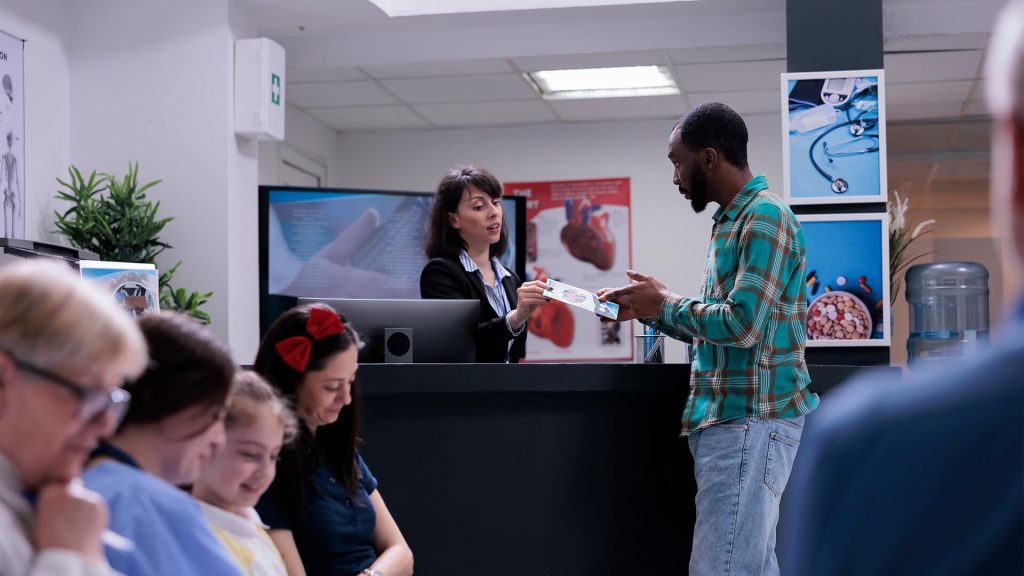
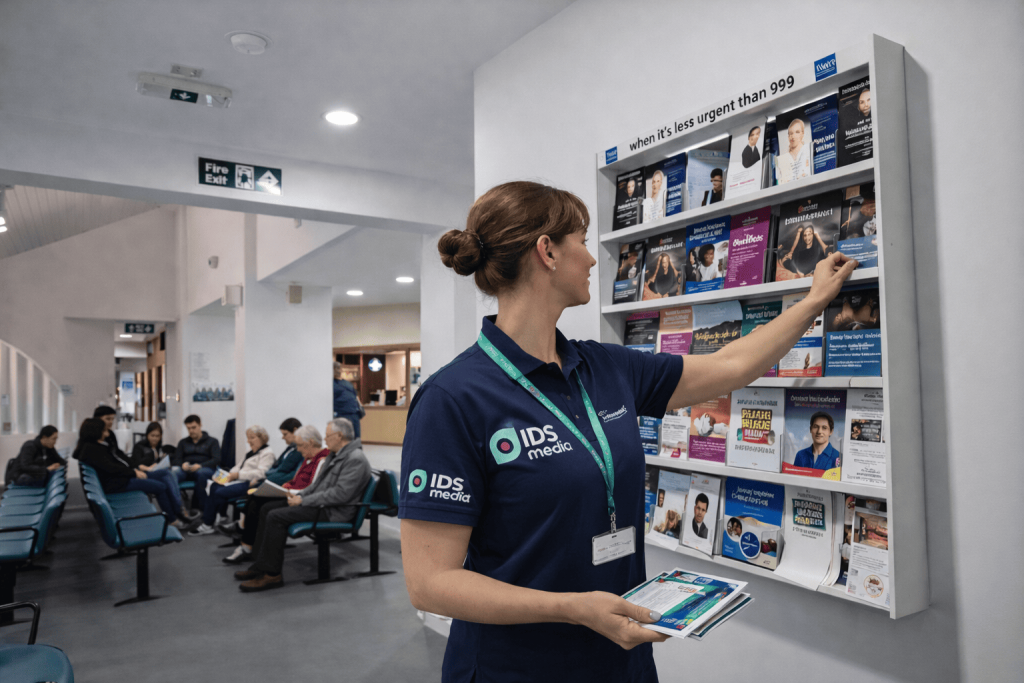
GP surgeries offer something that’s difficult to recreate through many other media channels: the opportunity to reach people while health and wellbeing are already likely to be on their minds.
Patients may also spend several minutes in the waiting room, giving them time to notice and engage with information that feels relevant to them. IDS Media’s 2026 YouGov research found that 94% of patients notice health posters or leaflets in GP waiting rooms, while 93% are open to learning about ways to improve their health when visiting a practice.1
This creates valuable opportunities for charities, healthcare organisations, public bodies and suitable commercial brands. But a successful campaign begins with a clear objective. Here are 10 ways GP surgery advertising can support it.
1. Signpost people to services and support
A GP waiting room can help charities and healthcare organisations reach people who may need their support but don’t yet know it’s available.
The campaign might direct patients towards a helpline, local service, online tool, peer-support network or trusted source of further information. It can also reach someone attending an appointment on behalf of a child, partner, relative or friend.
Keeping the message clear is important. People should be able to understand who the service is for, how it could help and what to do next without having to work through large amounts of information.
Tommy’s used IDS Media’s network to raise awareness of its Miscarriage Support Tool. The charity reported an increase in visits to its website and the number of people completing the online tool after the campaign began.3
2. Encourage disease prevention and healthier choices
GP surgery campaigns can place practical prevention messages in front of people when they may be particularly open to considering their health.
This could include support with stopping smoking, improving nutrition, maintaining a healthy weight or understanding risk factors associated with a particular condition. The aim isn’t to pressure people into making an immediate decision. It’s to offer useful, credible information and a realistic next step.
Campaigns can also connect awareness with action. A poster or digital screen might introduce the message, while a leaflet provides more detail to take away and a QR code directs someone to additional support.
Independent analysis by Circana of a Nicorette QuickMist campaign across IDS Media’s GP surgery network found an uplift in sales of approximately 12% above matched control locations. The wider Nicorette brand generated £3.49 in incremental sales for every £1 invested in the activity.2
3. Encourage earlier action and diagnosis
People often live with symptoms before discussing them with a healthcare professional. They may be uncertain whether something is serious, feel uncomfortable raising it or assume it will resolve by itself.
Well-designed GP surgery advertising can help people recognise when a change in their health may be worth discussing. It can explain common signs and symptoms, address some of the reasons people delay seeking advice and make the next step feel manageable.
The wording needs to be handled carefully. It should inform rather than alarm and avoid suggesting that someone can diagnose themselves from a poster or leaflet.
The most useful campaign may simply give someone the confidence to start a conversation, arrange an appropriate appointment or visit a reliable source of information.
4. Build awareness of symptoms and conditions
Some campaigns need to begin one step earlier by helping people understand that a condition exists and who it can affect.
GP surgery advertising can support awareness of conditions that may be misunderstood, overlooked or difficult to discuss. It can also challenge assumptions – for example, that a condition affects only a particular age group or type of person.
Creative should focus on the information people genuinely need. A memorable headline can introduce the subject, but it should be supported by clear language, inclusive imagery and an obvious source of further help.
For sensitive or complex conditions, a leaflet can give people information to read privately, revisit later or pass to a partner, relative or friend.
5. Promote vaccination and screening programmes
Vaccination and screening campaigns often need to turn broad awareness into a specific, time-sensitive action.
GP surgery advertising can explain who is eligible, why the programme matters and how to take part. It can also help address uncertainty by answering a small number of common questions or directing patients towards more detailed guidance.
This is one of the areas patients say they’re particularly interested in. In IDS Media’s 2026 YouGov research, vaccinations and disease prevention were the most popular type of waiting-room information, selected by 51% of respondents.1
6. Help patients prepare for healthcare conversations
A campaign doesn’t always need to ask someone to buy, book or register. Sometimes its most useful role is helping them have a better-informed conversation.
Information in the waiting room can encourage patients to think about their symptoms, questions or treatment experiences before seeing a healthcare professional. This may help them explain their concerns more clearly and make better use of the appointment.
Patient communication can also be supported by carefully coordinated healthcare professional materials. When The Migraine Trust distributed information packs to 2,000 GPs, subsequent research found that awareness of the charity among surveyed GPs and nurses rose from 36% and 45% respectively to 68%. The proportion who said they had recommended the charity’s services to patients also increased from 45% to 62.5%.4
7. Support treatment education and adherence
For people managing a diagnosed condition, clear information can help them understand their treatment and the importance of following professional advice.
Campaigns might explain how a treatment works, encourage people to discuss side effects or concerns, or remind them where to find reliable support. They can also introduce products that may help people manage their health, provided the message is appropriate for the environment and meets the necessary regulatory requirements.
Healthcare decisions are personal and can have significant consequences. Creative adapted from a general consumer campaign may therefore need to be reconsidered. Education, reassurance and credibility are likely to be more useful than urgency, exaggerated promises or a heavily sales-led message.
8. Reach carers, families and wider support networks
The person who notices a message may not be the person who ultimately benefits from it.
Patients are often accompanied by partners, parents, children, carers or friends. Someone attending for their own appointment may also recognise information that could help another person in their life.
That wider reach can be particularly valuable for campaigns relating to caring responsibilities, children’s health, older people, mental health or conditions people may find difficult to discuss.
IDS Media’s YouGov research found that 83% of patients would be likely to share useful health information seen in a GP practice with friends or family.1 Giving people something practical to pass on – such as a leaflet, web address or QR code – can help the message travel beyond the waiting room.
9. Recruit people for research and clinical trials
Researchers can struggle to reach the people who may be eligible for a study or interested in contributing to healthcare research.
GP surgery advertising can help introduce suitable research opportunities, explain why participation matters and direct people towards an approved screening or registration process.
These campaigns need particularly careful planning. The audience, eligibility criteria, location, study requirements and response route should all be clear before the media and creative approach are agreed.
The campaign should never imply that participation is guaranteed or place inappropriate pressure on someone to respond. Its role is to make relevant people aware of the opportunity and give them a clear route to reliable information.
10. Generate appointments, enquiries and appropriate commercial action
GP surgery advertising can also support a suitable commercial objective, from generating appointments and enquiries to increasing awareness and consideration of a health-related product or service.
Boots Hearingcare, for example, has used posters and leaflets across IDS Media’s GP surgery network to reach people who may benefit from hearing support.5 Other campaigns have used QR codes and dedicated landing pages to help connect offline engagement with an online action.
The environment still matters. People are unlikely to make an impulsive decision about something that could affect their health. The campaign needs to explain the relevance of the offer, provide enough reassurance and give people the confidence to take an informed next step.
Connecting offline attention with online action
QR codes and memorable web addresses can make it easier for people to move from a waiting-room message to further information, a support tool, an enquiry form or an appointment page.
The destination deserves as much attention as the advertising. It should continue the same message, work properly on a mobile phone and take people directly to the promised information or action.
Where appropriate, campaign reporting can combine IDS Media’s delivery and footfall information with client-owned data such as scans, website visits, enquiries, bookings or completed tools.
Start with the action you want to inspire
GP surgery advertising can support a wide range of campaign objectives, but the strongest campaigns begin with a clear understanding of the audience and what the communication should help them think, feel or do.
IDS Media works with charities, agencies, healthcare organisations and brands to develop campaigns across GP surgeries and the wider healthcare estate. Our team can help you choose the right environments and formats, adapt creative for the setting and build a campaign around the action you want to inspire.
To discuss your next campaign, contact the IDS Media team.
Sources
- IDS Media, Patient engagement in GP waiting rooms, research conducted by YouGov, 2026. Base: 253 respondents.
- Circana, Nicorette QuickMist IDS Campaign Evaluation, August 2023.
- Tommy’s client testimonial and campaign information supplied by IDS Media.
- IDS Media, The Migraine Trust HCP Feedback, 2023.
- IDS Media, Boots Hearingcare Campaign Report, Q1 2026.