
Six key takeaways for effective healthcare campaign measurement
- Effective healthcare campaign measurement starts with a clear objective, defining what success should look like before deciding which metrics to use.
- Reach and impressions only tell part of the story, with meaningful measurement focusing on what people understand, feel or do after seeing a campaign.
- Patient and healthcare professional feedback can uncover valuable insights that quantitative data alone may miss, helping campaigns respond to real-world needs.
- The right measures depend on the organisation and its objectives, from awareness, service uptake and behaviour change to brand loyalty and commercial return.
- Campaign impact can extend beyond the original audience, with healthcare information often shared with family, friends and others who may benefit from it.
- Healthcare campaign measurement delivers the greatest value when insight is used not only to demonstrate success, but to strengthen the strategy and communication that comes next.
Measuring impact in healthcare communication campaigns
How do you know whether a healthcare communication campaign has worked?
Healthcare campaign measurement can easily become a conversation about reach, impressions, clicks and return on investment. But for Dean Gahagan, Joint Managing Director at IDS Media, one conversation from earlier in his career has stayed with him.
He was discussing a campaign with Prostate Cancer UK and asked what success would look like.
The answer stopped him in his tracks.
“He said, ‘If we get one man early enough, and his cancer is caught early enough that we can save his life, I would deem that a success.’ I remember thinking, there’s really nothing more to say. He was absolutely right.”
It’s a powerful reminder that success in healthcare communication doesn’t always arrive neatly packaged as a click, enquiry, impression or return on investment.
Sometimes it could be a life saved.
For another organisation, success might mean helping someone recognise a symptom, encouraging them to speak to their GP, increasing use of a support service or giving patients greater confidence in managing a condition.
For a commercial healthcare brand, sales and return on investment may be entirely appropriate measures.
The important thing is knowing what you’re trying to achieve before deciding how you’re going to measure it.
“Every healthcare communication campaign is different,” Dean says. “You might be trying to save lives, improve someone’s healthcare journey, raise awareness of symptoms or drive sales of a product or service. You can’t put the same definition of success around all of them.”
That’s particularly important when working with healthcare charities.
Macmillan Cancer Support and the British Heart Foundation may both want to reach patients through trusted healthcare environments, but the people they’re supporting, the information they need and the outcomes each organisation wants to achieve can be very different.
“They all have their own sensitive stories and patient journeys,” Dean explains. “You have to understand what that organisation is trying to achieve and build the campaign around it.”
Effective healthcare campaign measurement starts with the objective
That sounds obvious.
In practice, Dean has seen organisations begin at the other end of the process.
They want to know how many people a campaign will reach, how many impressions it will generate or what return they can expect before establishing what they actually need the communication to achieve.
At IDS Media, the conversation starts with the objective.
“The client will come to us with their objectives, and then we sit down together and work out how we can help achieve them. Who are we trying to reach? What do we want those people to understand or do? Where are they in their patient journey? Once we’ve understood that, we can start looking at the right environments and how success should be measured.”
That approach also helps prevent reach becoming the default measure of effectiveness.
A campaign seen by a million people may look impressive on a media report. But if very few of those people need the information, are in the right mindset to engage with it or take the action the organisation intended, the number tells only part of the story.
Dean often compares healthcare communication with other forms of advertising.
Someone rushing through a busy railway or Underground station after a long day may technically have been exposed to a health message. But that doesn’t mean they’ve stopped to consider their symptoms, absorb the information or think about making an appointment.
A patient sitting in a GP waiting room is in a very different mindset.
“It’s about getting the right audience, but also an audience that’s going to engage because the message is relevant to them at that time,” Dean says. “That’s why reach on its own doesn’t tell you whether a healthcare campaign has worked.”
What happens after someone sees the message?
This is where healthcare campaign measurement starts to become more meaningful.
Rather than stopping at how many people could have seen a campaign, organisations can look at what happened next.
Did awareness increase?
Did more people visit a website or landing page?
Did calls to a support line increase?
Did someone scan a QR code?
Did patients ask healthcare professionals about the condition?
Did uptake of a service increase?
Did the communication give people greater confidence to make an informed decision?
Not every outcome is equally easy to capture. But Dean believes the starting point should always be the behaviour or response the campaign was designed to encourage.
And sometimes the impact extends beyond the person who originally saw the message.
IDS Media’s March 2026 YouGov research found that 83% of GP patients are likely to share helpful health information with others.
That matters.
A patient may encounter information about a condition, service or charity in a GP waiting room and later mention it to a partner, parent, friend or colleague who needs that support.
The original media interaction may never appear as a click or enquiry, but the information has travelled further.
“Healthcare information gets shared,” Dean says. “Someone might see something that’s not relevant to them personally, but they know somebody it could help. That’s another reason you can’t always look at an immediate response and decide whether a campaign has been successful.
Meaningful healthcare campaign measurement starts by accepting that every campaign is different.
There is no universal set of metrics that every organisation should chase.
The question is much more fundamental:
What did we want this campaign to change – and did it change it?
Listen to the people closest to the patient
Healthcare campaign measurement doesn’t always have to happen after a campaign has finished.
Some of the most useful insight can come before the first advert appears.
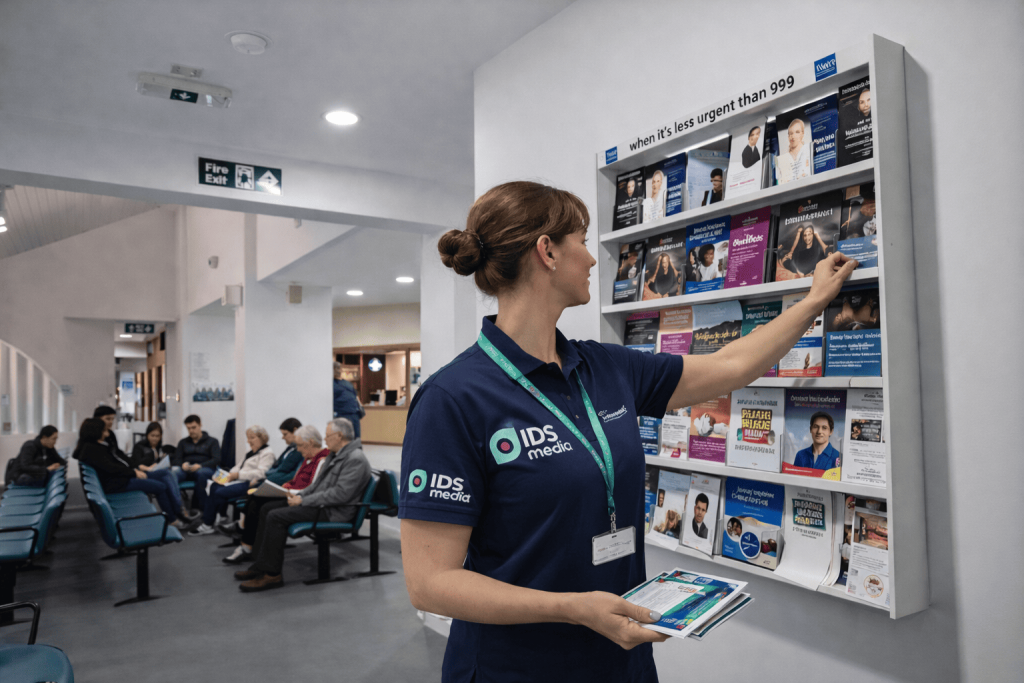
IDS Media regularly brings clients together with healthcare professionals (HCPs) to understand whether a proposed campaign will genuinely add value to patients.
These conversations can explore everything from the language and creative approach to the information HCPs believe their patients need and the supporting materials that could help them continue the conversation.
That access provides something campaign data alone can’t always reveal.
“Healthcare professionals are talking to patients every day,” he says. “They can tell us whether something is relevant, whether they’d be comfortable having it in their environment and whether they think it will actually help their patients. That’s incredibly valuable insight for us and for the client.”
It also means feedback can shape the communication rather than simply judge its performance afterwards.
A healthcare professional might identify a confusing message, suggest information patients regularly ask for or highlight an issue that wasn’t originally on the campaign team’s radar.
Sometimes those conversations reveal something much bigger.
Research can uncover the problem you weren’t looking for
IDS experienced this when it surveyed around 50 healthcare professionals in London about the issues they were seeing among patients.
The research covered a broad range of healthcare topics, but one response stood out.
Cost of living.
“That really surprised us,” Dean recalls. “You expect healthcare professionals to talk about cholesterol, skin conditions or other clinical issues. But they were telling us that cost of living was becoming a real healthcare concern for their patients.”
The connection became clearer when IDS explored the responses.
Financial pressure could mean someone struggling to afford transport to a hospital appointment or worrying about everyday essentials. That pressure could contribute to stress and anxiety, bringing the consequences back into the healthcare environment.
The insight presented IDS with an opportunity.
Rather than treating financial difficulty as something outside healthcare, it began looking at organisations that could provide patients with practical support.
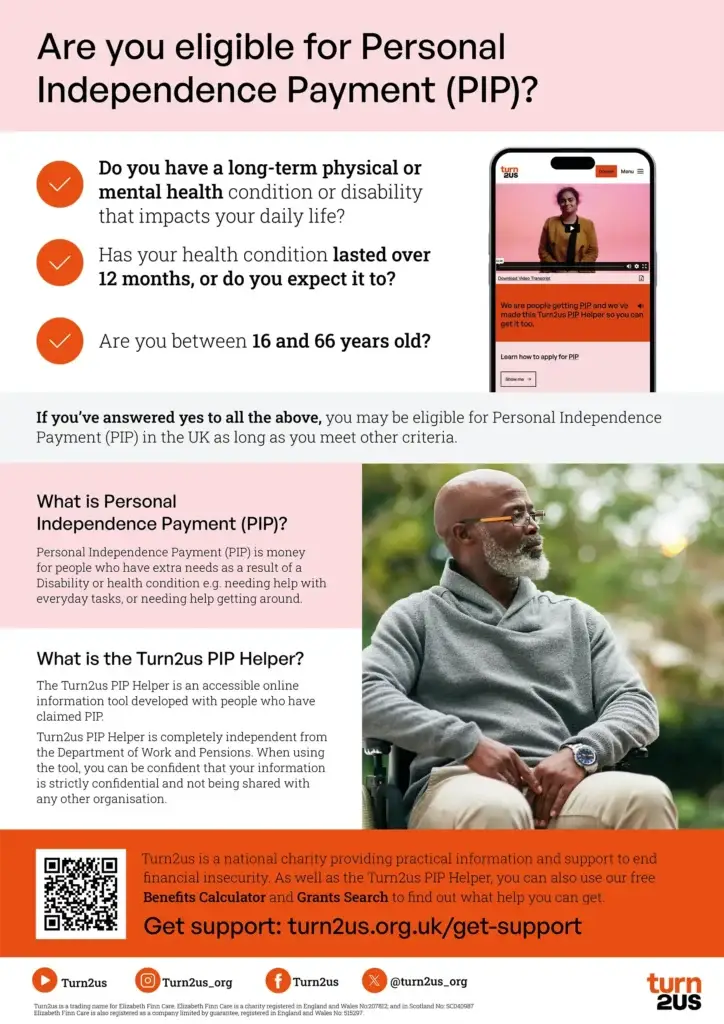
One of those organisations was Turn2us, a national charity helping people experiencing financial insecurity.
Turn2us has subsequently used IDS Media’s healthcare environments to promote support including its Benefits Calculator, Grants Search and PIP Helper, giving patients somewhere practical to turn for information that a busy healthcare professional may not have the time or specialist knowledge to provide.
“We’re helping connect the patient with an organisation that can support them,” Dean explains. “That also helps the GP, because you’re giving patients access to information and services that sit outside what the healthcare professional can realistically provide during an appointment.”
This demonstrates why research and campaign evaluation should do more than prove that activity worked.
They should uncover opportunities to make future communication more useful.
Not every meaningful outcome is a sale
The measures that matter also depend heavily on the type of organisation behind the campaign.
A commercial healthcare brand may prioritise sales, product uptake and ROI. A charity may define success very differently.
The Stroke Association provides a good example. A campaign promoting support services isn’t designed to sell a product, so measuring it against commercial metrics would make little sense.
Instead, the organisation may want to understand whether more people are accessing its services.
“You might use a unique telephone number on the campaign and see that calls to the support service increased,” Dean says. “For a charity, that’s really important because they can take that information back to stakeholders or funders and demonstrate that the campaign has helped more people access support.”
Website visits, QR code scans, enquiries and service uptake can all help build that picture.
But there is another layer that is harder to capture on a dashboard.
Trust.
Confidence.
Reassurance.
Whether someone feels better equipped to talk to their GP.
Whether information is shared with somebody else who needs it.
IDS Media’s YouGov research found that 83% of GP patients are likely to share helpful health information with others.
83% of GP patients are likely to share helpful health information with others.
That means the impact of a healthcare campaign can travel beyond the person sitting in the waiting room.
Someone may see information about stroke symptoms and mention it to a parent. They might discover a support service and pass it to a friend. A carer could take information home to a family member.
Those actions may never be directly attributed to the original campaign, but they can still represent meaningful impact.
Numbers tell you what happened. People can help explain why.
This is why Dean doesn’t believe healthcare campaign measurement should rely exclusively on quantitative data.
Reach, engagement, enquiries and uptake provide valuable evidence.
Qualitative feedback can reveal something different.
Healthcare professionals can explain how patients responded to a message. Patients can tell organisations whether the information was useful or reassuring. Focus groups can uncover why a creative approach worked – or why it didn’t.
“You need both,” says Dean. “The numbers are important, but you’ve also got to understand what patients and healthcare professionals are telling you. That’s how you learn and make the next campaign better.”
That’s where measurement becomes particularly valuable.
It stops being something added to the end of a campaign to prove success.
It becomes a way to listen, learn and improve what happens next.
Measurement should make the next campaign better
Proving that a healthcare campaign worked is valuable.
Understanding why it worked – and what you can learn from it – is even more useful.
Campaign evaluation should feed directly into future communication.
Patient needs change, healthcare evolves and new evidence emerges. What worked several years ago won’t necessarily be the right approach today.
“Everything we do is ultimately for the patient,” Dean says. “We’ve got to stay in tune with what patients need from our advertising and, if we’re not giving them that, understand how we can improve it. Healthcare is ever-evolving, so our communication has to evolve with it.”
One IDS Media project with the Migraine Trust shows how powerful that approach can be.
When insight changes the strategy
The starting point wasn’t a campaign.
It was research.
IDS wanted to understand how healthcare professionals viewed migraine and the challenges they faced supporting patients with the condition.
The findings identified an important gap: many healthcare professionals lacked confidence around migraine diagnosis and management.
That changed the communication challenge.
Rather than focusing exclusively on raising patient awareness of migraine, there was an opportunity to support the healthcare professionals those patients were turning to for advice.
“The research showed us where the weakness was,” Dean explains. “Healthcare professionals didn’t always feel confident dealing with migraine, so we could use that insight to create something that helped educate them while also increasing awareness of the Migraine Trust and the support available.”
The resulting campaign provided information designed to improve understanding of migraine and connect healthcare professionals with the charity’s specialist resources.
That’s exactly what effective campaign evaluation should achieve. It doesn’t just tell you what happened.
It helps you decide what should happen next.
Some value takes longer to appear
Not every campaign will produce an immediate, measurable response.
That’s particularly true when the objective is to build trust or familiarity with a brand.
Dean uses the baby brand Pampers as an example.
Advertising within maternity and healthcare environments may help parents become familiar with the brand long before they’re making repeated purchasing decisions.
That familiarity can develop into confidence. Confidence can become loyalty. And over time, loyalty can create commercial value.
“With a brand like Pampers, you’re creating that relationship with families,” Dean says. “If parents trust the brand and have a good experience with it, they may stay with it as their child grows. That will ultimately translate into sales, but you can’t always judge that relationship from an immediate response to one advert.”
It’s what Dean describes as the halo effect of appearing within trusted healthcare environments.
The immediate campaign metric may be awareness or engagement.
The longer-term outcome could be brand loyalty.
That distinction matters when organisations are deciding how quickly they expect healthcare advertising to deliver a return.
When ROI is the right measure, measure it properly
There are, of course, healthcare campaigns where commercial return is exactly what needs to be measured.
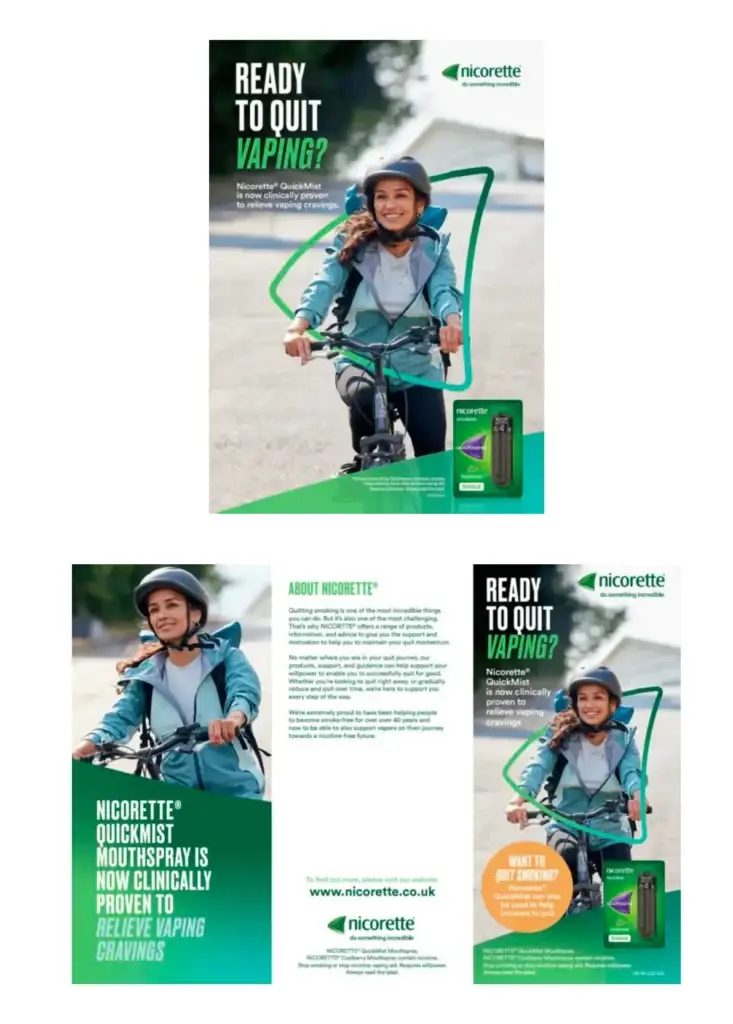
IDS Media’s work on a Nicorette QuickMist campaign provides a strong example.
The campaign ran across 1,150 GP surgeries, with independent research used to understand whether exposure to advertising within those environments influenced subsequent purchasing behaviour.
Rather than relying on campaign reach or assuming a rise in sales was connected to the activity, the research compared pharmacies around GP surgeries carrying the advertising with control locations where the campaign wasn’t running.
The result was an ROI of around three times the campaign investment.
“I think that’s really powerful,” Dean says. “The product isn’t being sold in the GP surgery where somebody sees the advert. They carry that message with them and make the purchasing decision later, usually in a pharmacy.”
It’s another reminder that the point of exposure and the point of action aren’t always the same.
Healthcare campaign measurement needs to reflect the full journey between the two.
Keep measuring what matters as healthcare changes
That journey will continue to change.
Healthcare is constantly moving forward. Treatments develop, patient expectations shift and NHS guidance evolves.
Campaign strategy and evaluation have to keep pace with that change.
GLP-1 weight-management treatments provide a good example. Several years ago, they weren’t part of the mainstream conversation around weight management in the way they are today. But the landscape has changed significantly.
In December 2024, NICE recommended tirzepatide as an option for managing overweight and obesity for eligible adults, alongside diet and physical activity. Access through the NHS has since been introduced on a phased basis, while weight-management treatments are also available through private healthcare.
That shift has created a greater need for clear, responsible education that helps people understand the role of these treatments and make informed decisions about their health.
IDS Media is now working with organisations in this area on educational campaigns designed to reach people within trusted healthcare environments.
“Several years ago, this wasn’t a conversation we would have been having,” Dean says. “Healthcare has moved on and these treatments are now part of the weight-management landscape. That creates an opportunity to provide people with clear, responsible information in environments where health is already front of mind.”
The same principle applies to healthcare campaign measurement.
As treatments, services and patient behaviour change, the measures used to judge communication need to remain relevant too.
Measure what matters
There will always be numbers to report.
- Reach
- Impressions
- Clicks
- QR scans
- Calls
- Sales
- ROI
All can provide useful evidence.
But none has much meaning without understanding what the campaign was trying to achieve in the first place.
A commercial healthcare brand may need to demonstrate sales growth.
A charity may need to show its funders that more people accessed support.
A public health campaign may want more people to recognise symptoms or speak to their GP.
And sometimes success may come down to one person acting on information at exactly the right moment.
That takes us back to the conversation Dean remembers from earlier in his career.
“If one person sees something, acts on it and it helps save their life, how can you say that campaign wasn’t successful?”
Perhaps that’s the most useful principle for healthcare organisations trying to measure impact.
Don’t start by asking what you can measure. Start by deciding what really matters – then measure whether you changed it.
Planning a healthcare campaign? Get in touch to see how IDS Media can help you reach the right people, define what success looks like and measure the impact that matters.