
Six key takeaways of effective healthcare advertising
- The strongest healthcare campaigns start with people, not organisations, using audience insight to shape every creative decision.
- Trust is built through clear messaging, authentic imagery and creative that reflects the experiences of the people it’s designed to reach.
- Accessible design goes beyond colours and typography, helping remove barriers that might prevent people engaging with important health information.
- Real-world examples, including campaigns for Help for Heroes and the National Kidney Federation, show how thoughtful creative can improve engagement and encourage action.
- Every design element should have a purpose, guiding people naturally from awareness to understanding and making the next step clear.
- Healthcare creative delivers the greatest impact when strategy, design and media planning work together from the very beginning.
How to create healthcare advertising that patients actually engage with
Healthcare organisations spend significant time and money developing campaigns designed to educate, encourage and improve health outcomes.
Yet many struggle to achieve the engagement they hoped for.
Patients walk past posters without noticing them.
Digital screens become part of the background.
Leaflets remain untouched.
The problem isn’t always the message.
Often, it’s how that message is communicated.
The strongest healthcare campaigns earn attention, build trust and encourage people to act.
For Dean Gahagan, Joint Managing Director at IDS Media, successful healthcare advertising begins with understanding the people you’re trying to reach.
“Creative should never start with the organisation or the campaign objectives,” says Dean. “It should start with the audience. Who are they? What are they feeling? What questions do they have? If you understand those things first, the creative decisions become much easier.”
That shift in thinking changes everything.
Instead of asking, “What do we want to say?”
The better question becomes: “What does our audience need to hear?”
Trust is the foundation of healthcare communication
Healthcare is unlike almost any other sector. People rarely engage with healthcare advertising out of curiosity.
They’re often looking for reassurance.
Answers.
Support.
Or guidance during an uncertain time.
That means trust has to be established almost immediately.
If a campaign feels confusing, overly promotional or difficult to understand, people are far less likely to engage with it.
“Healthcare communication has to feel credible from the very first moment,” Dean explains. “People need to believe the information they’re seeing, understand why it’s relevant to them and feel confident taking the next step.”
Healthcare environments naturally support that trust.
Messages displayed within GP surgeries, hospitals and pharmacies benefit from being seen alongside healthcare professionals and trusted services, helping audiences feel more confident in the information they’re receiving.
But trust doesn’t come from location alone.
Creative plays an equally important role.
Design for people, not organisations
One of the biggest mistakes healthcare organisations make is designing campaigns around themselves rather than the people they’re trying to reach.
It’s easy to focus on organisational priorities. Clinical terminology. Internal messaging.
Or trying to communicate too much information at once.
Patients approach communication very differently. They’re asking much simpler questions.
Is this relevant to me?
Can I trust it?
What should I do next?
If those questions aren’t answered quickly, engagement is often lost.
“One of the biggest mistakes I see is organisations trying to speak to everybody at once,” says Dean. “I remember seeing a stairlift advert with people from every possible demographic standing around it. You could tell it had been designed to please everyone, but it ended up feeling authentic to no one.
“The strongest campaigns know exactly who they’re speaking to and aren’t afraid to show it.”
That means every creative decision should help reduce uncertainty rather than increase it.
Images should feel authentic. Headlines should be clear. Language should avoid unnecessary jargon.
Most importantly, audiences should understand within seconds who the communication is intended for.
Simplicity creates confidence
Healthcare campaigns often deal with complex conditions, treatments and services.
The temptation can be to explain everything.
In reality, that usually has the opposite effect. People already feeling anxious or overwhelmed don’t need more information. They need clearer information.
Successful healthcare creative removes complexity.
It prioritises the most important message.
It uses plain language.
It gives readers confidence that they understand what they’re looking at and what they should do next.
That doesn’t mean oversimplifying important health information.
It means presenting it in a way that’s accessible to the widest possible audience.
“Good healthcare communication isn’t about saying more,” Dean explains. “It’s about making the important information easier to understand.”
Representation matters
People are far more likely to engage with healthcare communication when they recognise themselves within it.
That goes far beyond age or ethnicity.
It’s about reflecting real experiences. Real communities. Real situations.
Whether someone is waiting for a diagnosis, managing a long-term condition or supporting a family member, effective creative acknowledges where people are emotionally as well as clinically.
That emotional connection helps campaigns feel relevant rather than generic.
It’s another reason why authentic photography, inclusive design and carefully considered messaging often outperform heavily branded creative.
Healthcare communication isn’t trying to sell a lifestyle. It’s trying to support people through important moments in their lives.
Dean has spent years reviewing healthcare campaigns and has seen how small creative decisions can make the difference between someone engaging with a message or walking straight past it.
“We worked with the National Kidney Federation on a campaign targeting Southeast Asian communities,” he said. “Producing the creative in Urdu meant we could communicate in the language that resonated most with the audience. It helped make the message feel relevant, accessible and genuinely useful.
“I’ve also seen campaigns aimed at older African men using imagery of a young white man. However good the message is, people simply won’t feel it’s speaking to them.”
Effective healthcare communication starts with recognising that different communities have different languages, cultures, experiences and expectations. Creative should reflect those differences if organisations want audiences to engage.
Every creative element should have a purpose
Strong healthcare campaigns don’t rely on one brilliant headline or one striking image. They’re built from lots of thoughtful decisions working together.
The headline captures attention.
The image builds recognition.
The copy explains the message.
The design creates clarity.
The call to action removes uncertainty.
Every element supports the next.
“Creative should guide people naturally,” says Dean. “They shouldn’t have to work out what you’re asking them to do. Good design makes the journey obvious.”
That principle becomes even more important in healthcare environments, where people may only spend a few moments looking at a poster before being called into an appointment.
Every second, every word and every design decision has a purpose.
Strategy in practice: Help for Heroes
The principles of effective healthcare communication come to life when you see them in practice.
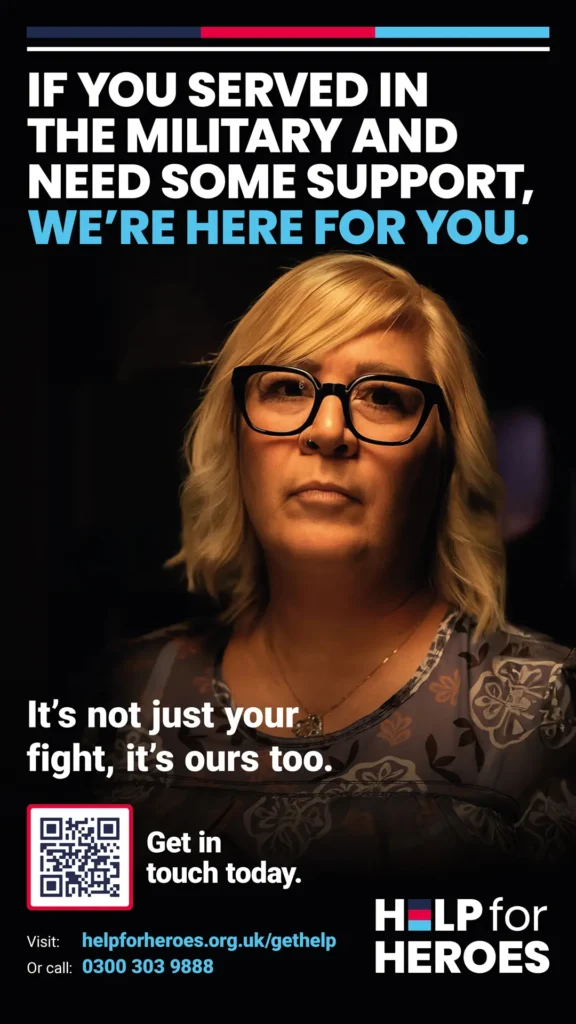
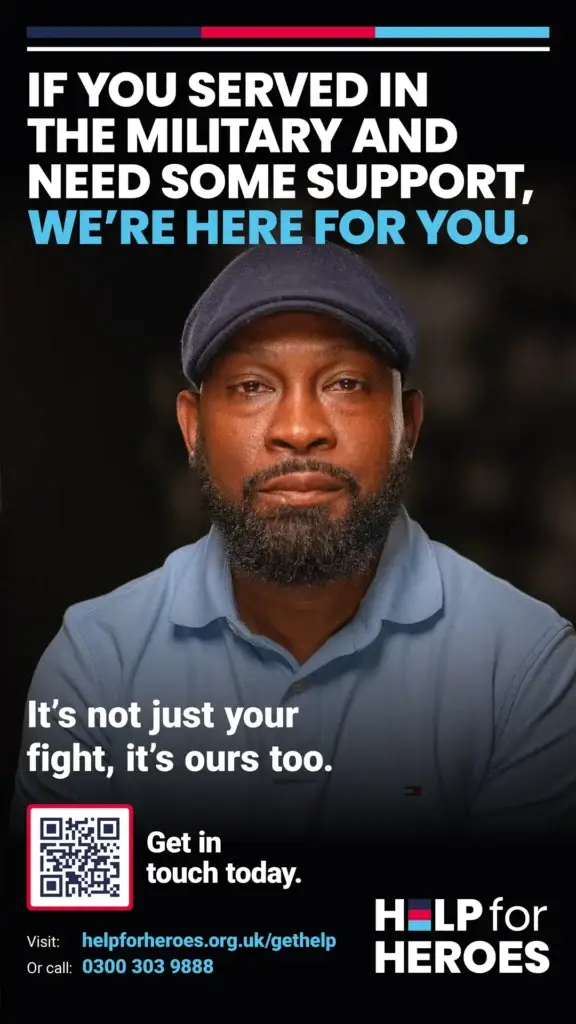
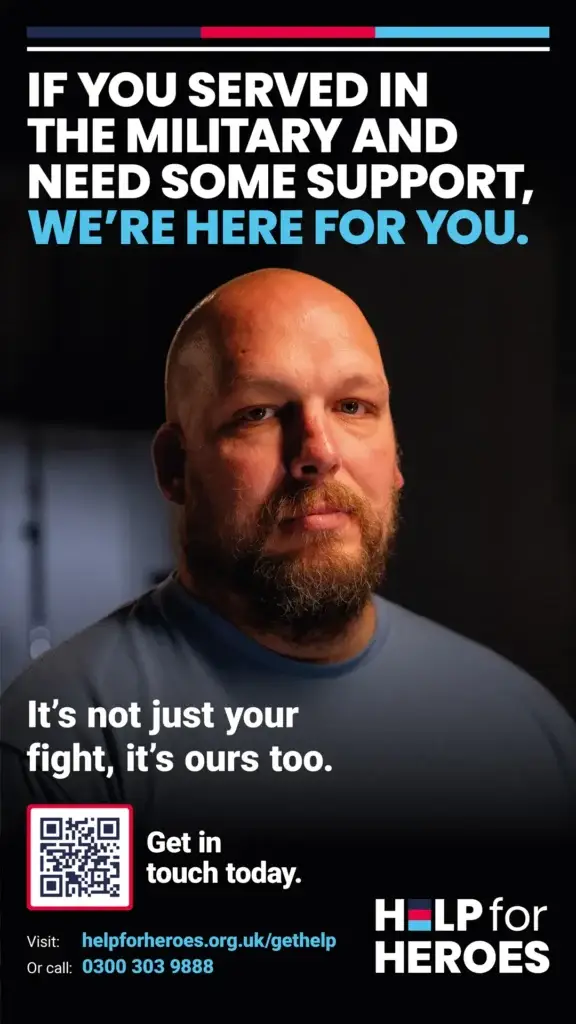
IDS Media’s campaign for Help for Heroes demonstrates how thoughtful creative can encourage people to stop, engage and take action.
Designed to support veterans who may need help after leaving the Armed Forces, the campaign combines authentic photography, straightforward language and a clear call to action. Every creative decision has a purpose, helping remove barriers and making it easier for people to seek support.
Rather than leading with the organisation, the campaign starts with the audience.
“If you served in the military and need some support, we’re here for you.”
Immediately, the message tells people who it’s for, acknowledges their situation and offers reassurance.
For Dean, that’s one of the campaign’s greatest strengths.
“If you’re asking somebody to tell you about 10 years of post-traumatic stress disorder, they have to trust you first,” says Dean. “That campaign worked because it spoke to veterans as people, not patients. It recognised what they might be feeling before asking them to take the next step.”
The creative itself follows the same principle. Real people replace generic stock imagery. The messaging is short, supportive and easy to understand. Strong typography creates a clear visual hierarchy, helping readers absorb the most important information first.
Finally, the campaign provides multiple ways to respond, including a QR code, website and telephone number, recognising that different people will prefer different routes to support.
Together, these elements create communication that feels accessible, trustworthy and relevant.
The results speak for themselves.
The campaign delivered a 400% increase in registrations compared with other media channels, demonstrating the impact that thoughtful creative and carefully chosen healthcare environments can have when they work together.
Accessibility isn’t an afterthought
Healthcare communication should be accessible from the very beginning of the creative process.
Dean recalls reviewing a vaccine campaign in Slough where local concerns weren’t being addressed clearly enough. Some members of the community were worried about whether the vaccine contained egg products, but the campaign materials didn’t answer that question in simple, reassuring language.
“Accessibility isn’t just about font sizes or colour contrast,” says Dean. “It’s about understanding what questions people are asking and making sure your communication answers them before uncertainty becomes a barrier.”
It means thinking about:
- Language.
- Readability.
- Photography.
- Cultural relevance.
- Emotional tone.
And whether someone can quickly understand what they’re being asked to do.
Every unnecessary barrier risks reducing engagement.
“People don’t have time to work out complicated messages,” Dean explains. “If healthcare communication is clear, relevant and easy to understand, people are much more likely to act on it.”
Small design decisions often make the biggest difference.
- Clear headlines.
- Strong colour contrast.
- Logical layouts.
- Simple language.
- Obvious calls to action.
Individually, they may seem minor.
Collectively, they shape whether a campaign succeeds.
Every campaign should make the next step obvious
Healthcare advertising rarely aims to solve someone’s problem immediately. Its purpose is usually much simpler.
Encourage someone to book an appointment. Scan a QR code. Visit a website. Speak to a healthcare professional. Ask a question.
The strongest campaigns reduce uncertainty by making that next step feel straightforward.
“Every campaign should leave people knowing exactly what they can do next,” says Dean. “If they have to think too hard about where to go or who to contact, you’ve introduced unnecessary friction into the process.”
That’s why effective calls to action are clear, visible and easy to follow.
They don’t compete with the rest of the creative.
They complete it.
Great healthcare creative is built through collaboration
Successful campaigns don’t happen because designers work in isolation.
They happen because strategists, creatives, healthcare professionals and clients all contribute their expertise.
- Understanding the audience.
- Selecting the right healthcare environments.
- Developing clear messaging.
- Creating accessible design.
- Testing ideas.
- Refining creative.
Every stage contributes to the final outcome.
For Dean, that’s where IDS adds the greatest value.
“Some organisations come to us looking for media space,” he explains. “What they often discover is that the biggest opportunity comes much earlier. When strategy, creative and media planning all work together from the start, campaigns become much more effective.”
Great creative starts with empathy
The most effective healthcare advertising begins with understanding people.
What they’re experiencing.
What they’re worried about.
What they need to know.
And what might give them the confidence to take the next step.
When campaigns are built around those principles, creative becomes more than communication.
It becomes a way of helping people access the information, support and care they need when they need it most.
As Dean concludes: “Whether we’re creating work for veterans, kidney patients or local communities, the starting point is always the same.
“Understand what matters to people first. Once you’ve done that, the creative decisions become much easier because you’re designing for real lives, not just delivering a message.”
Planning a healthcare campaign? Get in touch to see how IDS Media can help you reach the right people with creative that informs, engages and inspires action.