
Six key takeaways for integrated healthcare communication
- The most effective healthcare campaigns begin with the patient journey, not media channels, helping organisations deliver more relevant and meaningful communication.
- Different healthcare environments support different stages of the patient journey, creating opportunities to educate, reassure and encourage action at the right time.
- Using NHS data, local demographics and audience insights helps organisations choose the right healthcare environments and reduce media wastage.
- Successful campaigns adapt messages for different audiences while maintaining consistency across every touchpoint, building trust and confidence over time.
- Supporting healthcare professionals with complementary resources strengthens patient conversations and helps reinforce key campaign messages.
- Early planning gives organisations greater strategic flexibility, helping them secure the right healthcare environments and build campaigns around objectives rather than availability.
Integrating healthcare media: why the patient journey should shape your strategy
Healthcare campaigns rarely succeed through a single channel because patients don’t experience healthcare through a single touchpoint.
They visit a GP. They collect prescriptions from a pharmacy. They attend hospital appointments. They search online. They speak to family members. Every interaction shapes how they understand their health and the decisions they make.
That’s why the most effective healthcare communication strategies aren’t built around media channels. They’re built around the patient journey.
Too often, organisations begin campaign planning by asking where their advertising should appear.
A better question is: Where is the patient, and what information do they need at this stage of their journey?
The answer influences everything that follows.
From selecting the right healthcare environments to tailoring creative and deciding which communication channels should work together, understanding the patient journey creates campaigns that feel more relevant, more consistent and ultimately more effective.
For Dean Gahagan, Joint Managing Director at IDS Media, that’s where successful healthcare communication begins.
“The right strategy isn’t about choosing the biggest media channel. It’s about understanding the patient journey first, then selecting the environments and formats that best support it.”
That strategic mindset is more important than ever as healthcare organisations look to improve outcomes while making better use of limited budgets.
The patient journey should drive every communication decision
Every healthcare environment serves a different purpose.
Patients don’t visit a GP surgery, pharmacy or hospital for the same reasons, and they arrive at each location with different questions, expectations and needs.
Understanding those differences is one of the biggest opportunities in healthcare communication.
A patient visiting their GP may be looking for answers.
Someone collecting a prescription from their local pharmacy may already have a diagnosis and be thinking about treatment, medication or ongoing lifestyle changes.
A hospital patient is likely to be engaging with specialist care or managing a more complex condition.
Each environment presents a different opportunity to communicate.
“People often think about healthcare environments as individual advertising channels,” says Dean. “We look at them as different stages of the patient journey. Every location gives you a different opportunity to educate, reassure or encourage action.”
Thinking about healthcare environments in this way helps organisations consider what information patients need at each stage and how different environments can work together to support them.
Every healthcare environment has a different role
One of the most common mistakes organisations make is assuming the same creative, message and call to action will perform equally well everywhere.
Healthcare simply doesn’t work like that.
A GP surgery is often the beginning of a patient’s healthcare journey.
People arrive with symptoms, questions or concerns, making it an ideal environment for awareness campaigns, early intervention messaging and encouraging conversations with healthcare professionals.
Hospitals serve a different purpose.
Patients are generally receiving specialist care, attending clinics or managing diagnosed conditions. Communication can therefore become more specific, supporting treatment decisions, self-management or ongoing care.
Pharmacies occupy another important position.
For many people, they’re the most accessible part of the healthcare system, offering advice, prescriptions, vaccinations, smoking cessation services and everyday health support.
“No one travels 50 miles to visit their GP,” Dean explains. “Healthcare environments are community hubs. They’re local, trusted and highly relevant to the people using them. That’s why understanding the role of each environment is so important when you’re planning a campaign.”
Rather than treating every location in the same way, effective healthcare communication recognises the unique role each environment plays within a patient’s experience.
Consistency builds confidence across multiple touchpoints
Patients rarely make decisions after seeing a single advertisement.
More often, they encounter the same message several times across different environments before taking action.
They might first notice a digital screen while waiting for a GP appointment. Later, they pick up a leaflet explaining the condition in more detail. A healthcare professional reinforces that information during the consultation. Finally, they collect a prescription from their local pharmacy, where the same campaign appears again.
Each interaction builds on the last.
According to YouGov research, 94% of patients notice health messaging in GP waiting rooms, while 62% go on to take some form of action after seeing health information in that environment. The same research found that 86% trust health messaging within GP practices, highlighting the importance of delivering consistent information in trusted healthcare settings.
For Dean, this consistency is one of the biggest advantages of an integrated healthcare communication strategy.
“Patients don’t think in terms of channels,” he says. “They remember consistent messages. If they’re seeing the same advice in their GP surgery, speaking about it with a healthcare professional and then seeing it again somewhere else in their healthcare journey, it reinforces confidence and makes taking action much more likely.”
Integrated healthcare communication moves beyond awareness. It creates familiarity, builds trust and helps patients feel more confident about making decisions that could improve their health.
Data should shape channel selection, not assumptions
Every healthcare campaign has an audience. The challenge is understanding who those people are, where they are and how they engage with healthcare services.
Too often, campaign planning begins with assumptions instead of evidence.
Different health conditions affect different age groups, communities and geographic locations. Even neighbouring areas can have very different healthcare priorities, making a blanket approach to media planning both inefficient and ineffective.
“Health isn’t evenly distributed,” says Dean. “Different communities experience different health challenges. Age, ethnicity, location and local demographics all influence how people engage with healthcare, so your communication strategy has to reflect that.”
This is where data becomes invaluable.
Rather than selecting channels based on habit or previous campaigns, IDS begins by analysing NHS data, demographic information and local healthcare trends to identify where campaigns will have the greatest impact.
That strategic planning helps organisations reduce media wastage while ensuring messages reach the people most likely to benefit from them.
“We always encourage organisations to come and speak to us before they’ve committed to a media plan,” says Dean. “We can look at the data, understand the audience and recommend the environments that will give them the best return on their investment.”
One campaign doesn’t fit every audience
Even when organisations identify the right healthcare environments, another challenge remains.
Should every patient receive exactly the same message?
In most cases, the answer is no.
Patients experiencing symptoms for the first time require different information from those already managing a long-term condition.
Someone attending a specialist hospital clinic will usually have different questions from someone visiting their local pharmacy for advice.
Effective healthcare communication reflects those differences.
Rather than repeating identical creative across every location, successful campaigns adapt both the message and the level of detail. A digital screen might encourage someone to seek advice, while a leaflet can explain treatment options or support services in greater depth.
“Consistency doesn’t mean saying exactly the same thing everywhere,” adds Dean. “It means making sure every touchpoint supports the next one. The message stays consistent, but the level of detail changes depending on where the patient is in their journey.”
That distinction is often overlooked.
Supporting healthcare professionals strengthens patient communication
Effective healthcare communication doesn’t stop with patients.
Healthcare professionals also need access to clear, up-to-date information.
Alongside patient-facing campaigns, IDS develops HCP resources that support clinicians with the latest guidance and educational materials before patient consultations.
“That’s where the real value comes in,” says Dean. “Patients receive trusted information, healthcare professionals have the supporting resources, and those conversations become much easier and much more productive.”
When patients and healthcare professionals receive complementary information, consultations become more informed, more consistent and more likely to support positive health outcomes.
Strategy in practice: Breast Cancer Now
IDS Media’s work with Breast Cancer Now demonstrates how an integrated communication strategy can support both patients and healthcare professionals throughout the healthcare journey.
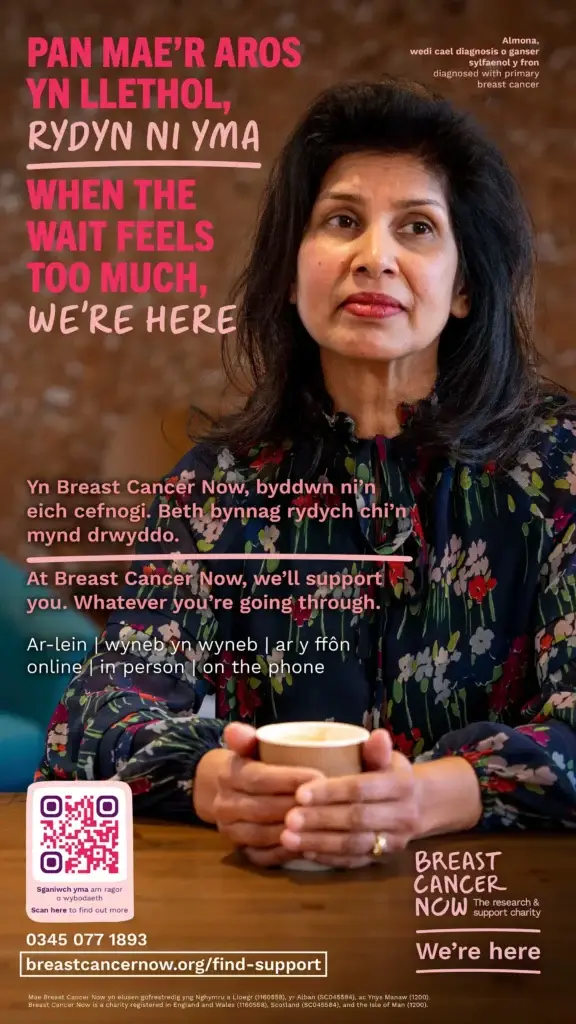
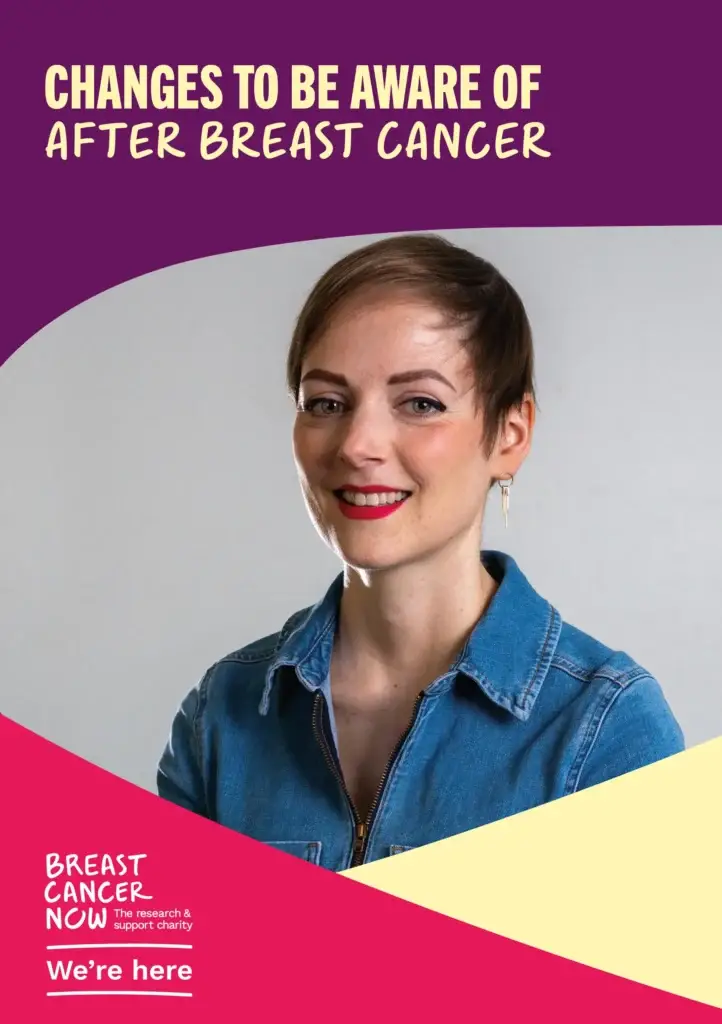
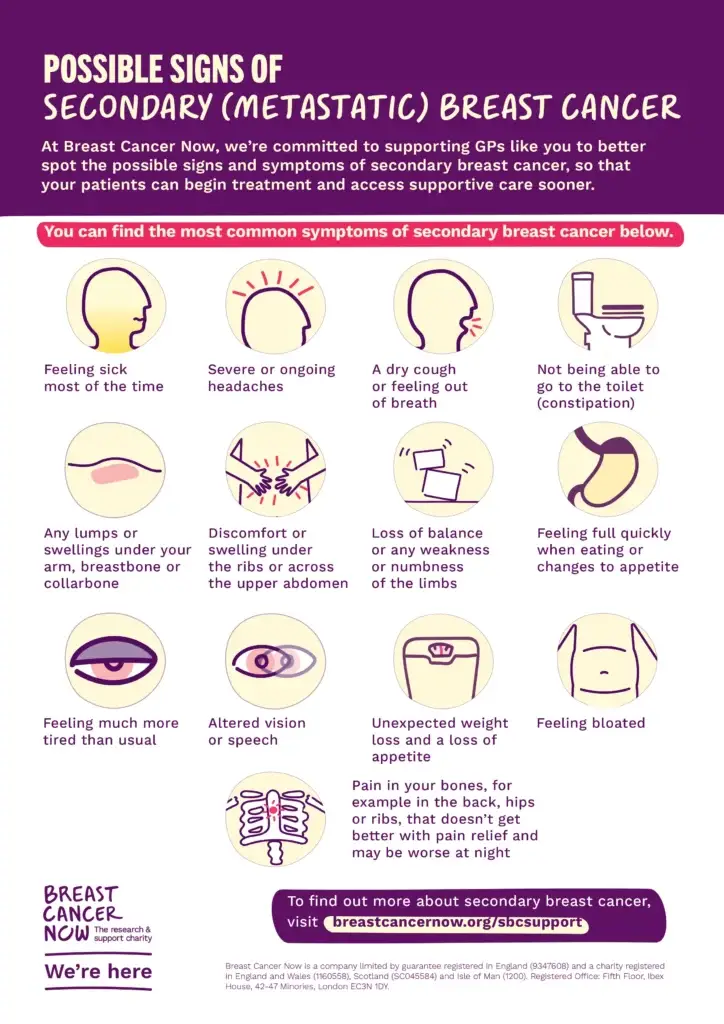
Instead of relying on a single healthcare environment, the campaign combined patient posters, educational leaflets and dedicated resources for healthcare professionals, ensuring every audience received information tailored to their role.
Patient-facing posters and leaflets (examples shown below) encouraged people to recognise the possible signs and symptoms of secondary breast cancer, seek advice and access further support, while complementary HCP resources helped clinicians identify symptoms sooner and reinforce key messages during consultations.
For Dean, that wider educational role is one of healthcare communication’s greatest strengths.
“Some of the best campaigns aren’t just speaking to the patient. They’re educating the people around them as well. Families, partners and carers often play an important role in encouraging someone to seek help, so every campaign has the potential to reach far beyond the person who first sees it.”
By combining complementary communications for patients and healthcare professionals, the campaign created more opportunities for informed conversations, earlier recognition of symptoms and better support throughout the patient journey.
Supporting healthcare professionals strengthens patient communication
One of the biggest mistakes organisations make is involving media specialists too late.
Creative has already been developed. Budgets have already been allocated. Channels have already been selected. At that point, opportunities to improve campaign effectiveness are often limited.
“Media planning shouldn’t be an afterthought,” says Dean. “When we’re involved early, we can help shape the whole strategy. We can recommend the right environments, advise on audience targeting, support creative development and make sure every element works together.”
That collaborative approach helps ensure campaigns are built around evidence rather than assumptions.
It also creates greater consistency across every patient touchpoint, helping organisations make better use of their budgets while improving engagement.
Effective planning also gives organisations access to the widest choice of healthcare environments and formats. Developing campaign strategy, creating bespoke creative and securing the most appropriate placements all take time.
“Ideally, we’d like organisations to start talking to us at least three months before a campaign launches,” says Dean. “Many of our most popular environments and formats are booked well in advance. Early planning gives clients more choice, gives us more time to build the right strategy and helps ensure campaigns are driven by objectives rather than availability.”
Strategy first. Channels second.
Healthcare communication has never been about placing messages in as many locations as possible.
It’s about understanding where patients are, what they need and how different healthcare environments can work together to support them.
When organisations begin with the patient journey, every communication decision becomes clearer.
The right environments.
The right message.
The right level of information.
The right opportunity to encourage action.
Healthcare communication works best when every touchpoint has a purpose. By understanding the patient journey first, organisations can build campaigns that feel more relevant, more connected and ultimately more effective.
As Dean concludes: “The strongest healthcare campaigns don’t start with channels. They start with people. Once you understand the patient journey, you can build a strategy that supports patients at every stage, using the right environments to deliver the right message at exactly the right time.”
Get in touch to discuss your next healthcare campaign.
Source: YouGov research, analysed by IDS Media UK