Six key takeaways from successful mobile billboard campaigns
- Mobile billboard advertising helps healthcare organisations reach audiences beyond traditional healthcare environments.
- The most effective campaigns place messages where target audiences already spend their time.
- Context matters – healthcare messages often perform better when delivered in relevant real-world settings.
- Mobile billboard campaigns work best when messaging is simple, bold and focused on a single action.
- Experiential campaigns can turn a mobile billboard into a platform for education, engagement and behaviour change.
- Mobile billboard advertising is most effective when used as part of a wider healthcare communication strategy.
Mobile billboard advertising for healthcare campaigns: when and why it works
Most healthcare communication happens in trusted healthcare environments.
GP surgeries.
Hospitals.
Pharmacies.
Waiting rooms.
And for many campaigns, that’s exactly where communication should happen.
According to YouGov research analysed by IDS Media UK, 86% of patients trust GP practices as a source of health information, while 93% say they are open to improving their health during a GP appointment. In addition, 94% notice health messaging within GP waiting rooms.
Those are powerful numbers.
But not every audience can be reached through healthcare environments alone.
What if the people you need to engage are at a football match, a community event, a shopping centre or a festival?
As Dean Gahagan, Joint Managing Director at IDS Media, explains: “There are audiences who aren’t sitting in waiting rooms every week. If you want to reach those groups, sometimes you need to take the message to them.”
Healthcare’s disruptor format
Healthcare communication is often static. Posters stay on walls. Digital screens remain in the same location. Leaflets sit in waiting rooms. Mobile billboard advertising does something different. It takes the message directly to the audience.
Dean describes the format as: “A disruptor.”
And that’s exactly what makes it effective.
Rather than waiting for people to engage with healthcare messaging, mobile billboards place that messaging where people are already spending their time.
For healthcare campaigns focused on awareness, prevention and behaviour change, that can create valuable opportunities to reach new audiences.
Reaching people where they already are
One of the biggest advantages of mobile billboard advertising is flexibility. Campaigns can be deployed in locations where target audiences naturally gather.
For example:
- Football stadiums
- Leisure centres
- Shopping districts
- Festivals
- Community events
- Town centres
Dean believes context plays an important role in campaign success.
“If you’re talking about alcohol awareness, there may be value in being outside a football ground,” he says.
“If you’re talking about prostate cancer, there may be opportunities around golf clubs or leisure centres.”
The thinking is simple.
Rather than delivering the same message to everyone, everywhere, healthcare organisations can place campaigns in environments where the audience is already present and the topic feels relevant.
For example, a prostate cancer campaign aimed at older men may benefit from being deployed at golf clubs, sports venues or leisure facilities where that audience naturally spends time.
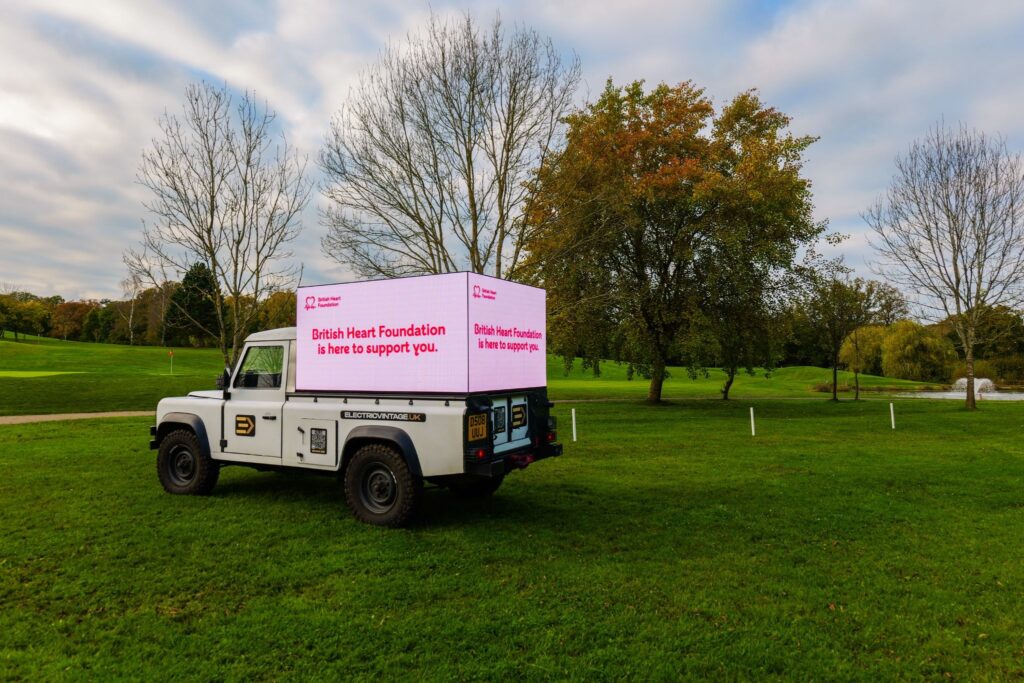
Similarly, an alcohol awareness campaign may generate stronger engagement when positioned in social environments where conversations around drinking habits already exist.
The result is communication that feels more targeted, more relevant and ultimately more likely to be remembered.
From advertising vehicle to community engagement hub
One of the reasons IDS Media’s mobile billboard stands out is that it can do far more than display a message.
Dean describes it as an experiential platform that allows organisations to engage directly with communities rather than simply advertise to them.
“People often think it’s just a moving advert,” he says. “Actually, it can become an engagement platform.”
IDS’s fleet of fully electric Land Rovers has supported a wide range of campaigns and events.
For example, they have been used at charity fundraising walks, helping to light the route and support participants throughout the event.
At community campaigns and public awareness initiatives, the vehicles can act as a focal point where healthcare professionals, charity representatives or brand ambassadors can meet people face-to-face, answer questions and distribute information.
The vehicles can also power additional equipment, allowing organisations to create more engaging experiences around the campaign itself. Whether that’s supporting a refrigerated product display, powering event equipment, screening video content or creating interactive activities, the format provides flexibility that traditional outdoor advertising cannot offer.
Dean believes this is where the real opportunity lies.
“Rather than simply delivering a message, organisations can create memorable experiences that encourage people to stop, engage and participate,” he says.
“That might involve promoting CPR awareness outside a football ground, supporting health conversations at a community event, or reaching younger audiences at festivals and public gatherings.”
The format becomes more than advertising.
It becomes a platform for education, engagement and behaviour change.
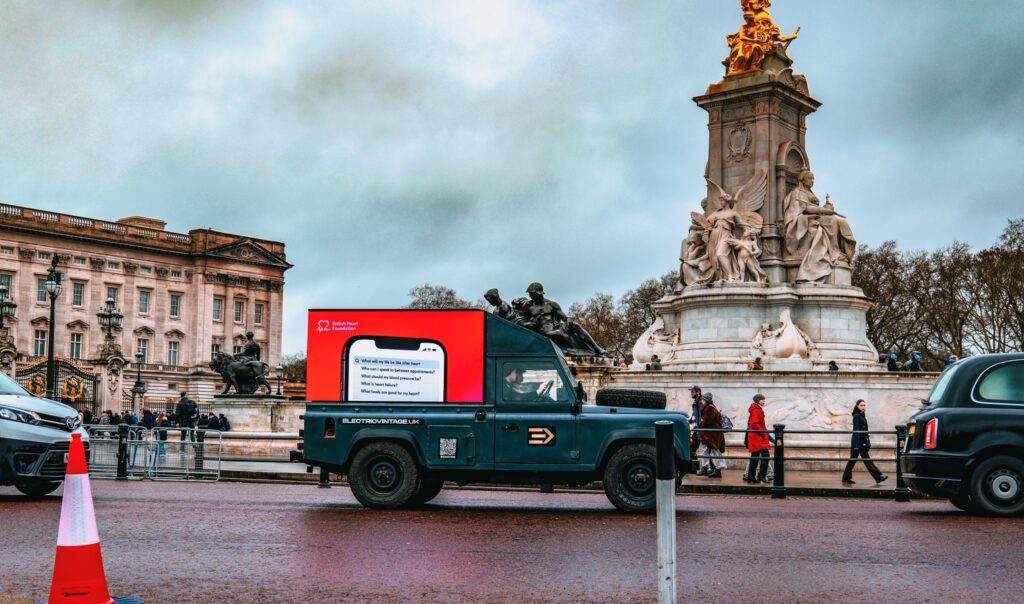
“The vehicles themselves play a vital role too,” says Dean. “As ex-military Land Rovers, they attract attention wherever they go. People stop, ask questions and want to know more. That curiosity creates natural opportunities for conversation and engagement that many traditional advertising formats struggle to achieve.”
The British Heart Foundation example
One recent IDS Media campaign demonstrates how effective this approach can be.
Working with the British Heart Foundation, an IDS Land Rover EV mobile billboard was deployed outside Woking Football Club to promote CPR awareness and life-saving skills.
The objective wasn’t to deliver a complex message. It was to deliver a memorable one.
As Dean explains: “The message was simple. CPR saves lives.
“That simplicity is key, because people may only see a mobile billboard for a few seconds. The strongest campaigns focus on one idea, one action and one clear takeaway.”
Why simple and bold wins
Mobile billboard advertising demands discipline. Unlike a brochure or website, there isn’t space to explain everything.
Dean believes the best campaigns keep things straightforward. “The messaging needs to be bite-sized,” he says. “People need to understand it almost instantly as they walk by.”
Healthcare communication can sometimes become complicated. Mobile formats force organisations to focus on what really matters.
What is the single message people need to remember?
What action do we want them to take?
What information will genuinely help them?
The campaigns that answer those questions tend to perform best.
Part of a wider healthcare communication strategy
Mobile billboard advertising isn’t designed to replace healthcare environments. It’s another tool within the healthcare communication toolkit.
GP advertising builds trust.
Healthcare environments reach people when they’re actively thinking about their health.
Digital channels provide ongoing engagement.
Mobile billboard campaigns extend communication into communities and public spaces.
Together, they help organisations reach audiences at different stages of their journey.
Why IDS approaches mobile billboard campaigns differently
Dean said: “For IDS, the conversation doesn’t start with the vehicle. It starts with a communication challenge.
“Who are we trying to reach? Where do they spend their time? What message will resonate? And what action do we want them to take?
“We’re not looking to sell someone a vehicle. We’re looking to help them reach an audience they may otherwise struggle to engage.”
He added: “Every campaign is then built around audience needs, objectives and outcomes. That often means creating bespoke solutions that combine healthcare environments, community outreach and mobile billboard advertising into one joined-up strategy.”
Final thoughts
The most effective healthcare communication reaches people where they are.
Sometimes that’s a GP surgery. Sometimes it’s a hospital.
And sometimes it’s outside a football stadium, at a community event or in the centre of town.
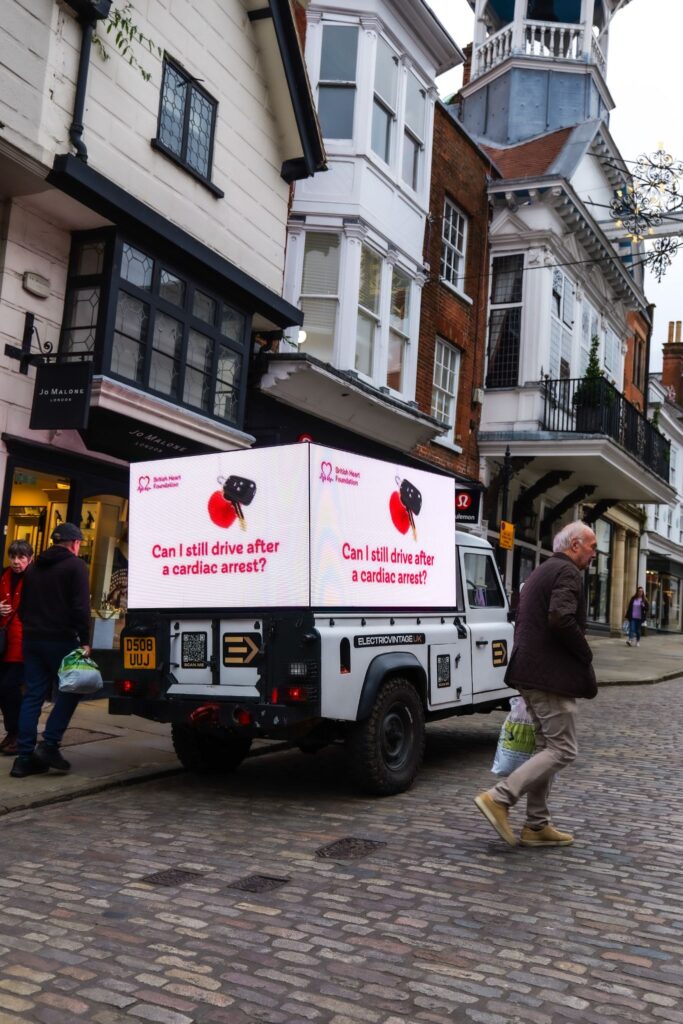
Mobile billboard advertising offers healthcare organisations a flexible way to take important messages beyond traditional healthcare environments and directly into communities.
“There are endless opportunities with this format,” says Dean. “The key is understanding when to use it and how it fits within a wider communication strategy.”
Planning a healthcare campaign?
Whether you’re exploring mobile billboard advertising, healthcare environments or a fully integrated communications campaign, IDS Media can help you identify the right channels for your audience and objectives.
Get in touch to discuss your next healthcare campaign.
Source: YouGov research, analysed by IDS Media UK