
Six key takeaways from effective healthcare charity campaigns
- The most effective healthcare charities focus on education, support and empowerment rather than promotion.
- Awareness days and campaigns create valuable opportunities to reach communities, start conversations and encourage action.
- Trust is one of the most important factors in healthcare communication, influencing whether people engage with and act on information.
- Healthcare charities often act as an important source of guidance and support beyond clinical appointments.
- Real stories from patients, survivors and families can create stronger emotional connections than statistics alone.
- The strongest healthcare campaigns combine trust, relevance and clear next steps to help people make informed decisions.
What healthcare charities can teach us about effective patient communication
When people talk about marketing for charities, the conversation often focuses on budgets, channels and campaign reach.
Yet the most successful healthcare charities tend to approach communication differently.
Their goal is rarely to sell a product or generate a transaction. Instead, they are trying to educate, reassure, support and empower people at some of the most difficult moments in their lives.
That difference matters.
In healthcare, effective communication isn’t built on attention alone. It relies on trust, relevance and understanding the mindset of the people you’re trying to reach.
As Dean Gahagan, Joint Managing Director at IDS Media, explains:
“Everyone’s got their own health story.”
Whether it’s cancer, diabetes, heart disease, mental health, thyroid conditions or a rare illness affecting a loved one, health information becomes relevant when it connects with something personal.
The charities that understand this best are often the ones creating the strongest engagement.
Awareness campaigns give charities a moment to be heard
Healthcare charities compete for attention every day.
Each organisation has important information, support services, educational resources and fundraising activities to communicate. Dean believes awareness campaigns work because they give charities a dedicated opportunity to focus attention on a specific issue.
As he explains: “When there’s an awareness day or month, that’s their special moment to really take the floor and talk to communities and patients.”
Mental Health Awareness Week, Breast Cancer Awareness Month and Diabetes Awareness Week all provide a natural platform for education and engagement. They create a focal point around a specific condition, helping charities cut through wider noise and connect with people who may benefit from their support.
Importantly, awareness campaigns aren’t just for existing service users.
Many are designed to reach people who may not yet recognise symptoms, understand available support or realise that help exists.
Charities often become a second layer of support
Healthcare professionals perform an extraordinary role, but time is limited.
A typical GP appointment lasts only a few minutes. Patients often leave with unanswered questions or concerns they didn’t have time to raise.
Dean sees charities as an important extension of the support patients receive from healthcare professionals.
“It’s almost like a second layer to the NHS,” he says. “The doctor can’t look after them 24/7 or provide information 24/7, so the charity becomes the next step for support and services.”
Organisations such as the British Heart Foundation, Cancer Research UK, Crohn’s & Colitis UK and the British Thyroid Foundation provide trusted information that patients, families and even healthcare professionals can access long after an appointment has ended.
For many people, a charity becomes the next step in their journey.
It may be a source of practical advice. It may provide emotional support. It may simply help someone understand what happens next.
Either way, charities help bridge the gap between diagnosis and understanding.
Trust matters more than reach
One of the biggest lessons healthcare charities can teach marketers is that trust should come before visibility.
A campaign may reach thousands of people, but if the message feels inappropriate, exaggerated or disconnected from the audience, engagement quickly disappears.
Healthcare communication requires sensitivity.
People are often dealing with uncertainty, anxiety, pain or life-changing diagnoses. They are looking for credible information and realistic guidance rather than bold claims or marketing language.
Dean believes charities often succeed because their primary objective is helping people rather than selling to them.
That creates a very different relationship with audiences.
As Dean puts it: “The better question isn’t ‘How do we get attention?’ It’s ‘How do we provide value?’”
Many national charities work through agency partners when planning awareness campaigns, media activity and patient engagement programmes. For organisations supporting these campaigns, success still depends on understanding the audience, respecting the sensitivity of healthcare communication and creating meaningful opportunities for engagement.
Why healthcare environments create stronger engagement
Context plays a significant role in how health information is received.
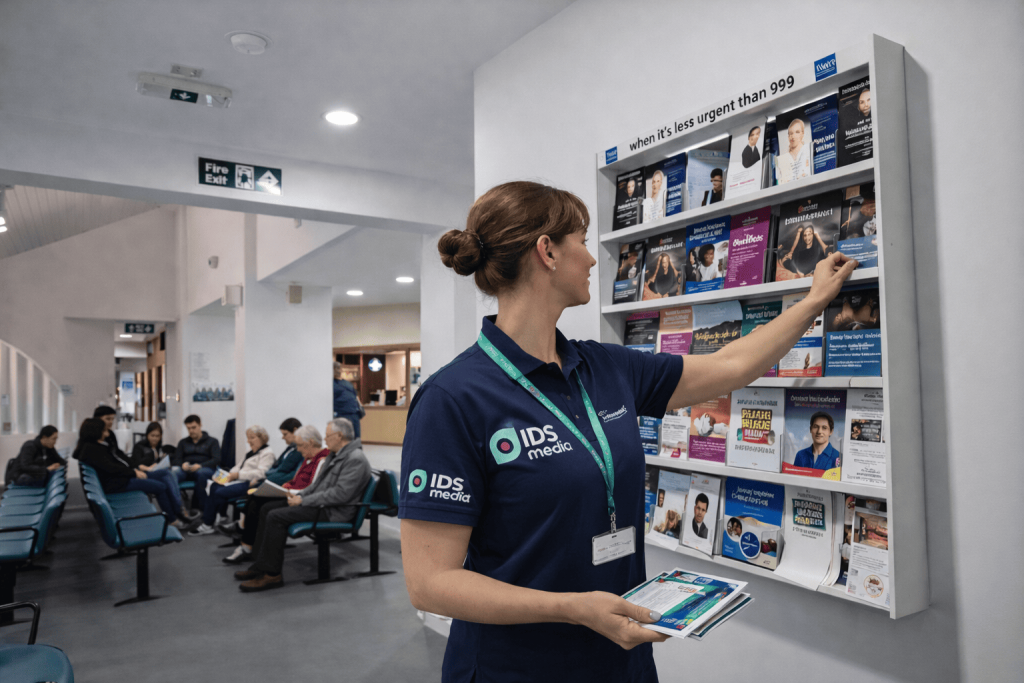
According to YouGov research analysed by IDS Media, 86% of patients trust GP practices as a source of health information, while 93% say they are open to improving their health during a GP appointment. In addition, 94% notice health messaging within GP waiting rooms.
These findings highlight the unique opportunity healthcare environments provide for education and awareness.
The reason is simple. As Dean explains: “People resonate and engage more with healthcare messaging inside a trusted healthcare environment.
“People sitting in a GP surgery, hospital or pharmacy are already thinking about health.
“They are often more receptive to information than they would be when scrolling social media, watching television or walking through a shopping centre.”
Healthcare environments also reach influential decision-makers beyond the patient.
As Dean points out, partners, spouses, parents and carers frequently encourage loved ones to seek help, book appointments or take symptoms seriously.
Effective health communication often creates a ripple effect that extends well beyond the individual who first sees the message.
A simple message can have a powerful impact
One recent example comes from an IDS Media campaign delivered on behalf of the Mental Health Foundation across more than 100 GP practices during Mental Health Awareness Week.
Rather than targeting people already receiving specialist support, the campaign focused on individuals who may have been struggling without recognising the signs or seeking help.
The creative was simple: Take action on your mental health. Even small actions make a difference.
The campaign demonstrated an important principle.
Healthcare awareness campaigns do not always need complex messaging.
Often, the most effective campaigns provide a simple next step, whether that’s visiting a website, reading further information, speaking to a healthcare professional or sharing a story.
As Dean notes, one of the most common mistakes organisations make is creating awareness without providing a clear path forward.
The best healthcare communication feels human
Perhaps the most important lesson healthcare charities can teach marketers is that people connect with people.
- Data is important
- Clinical evidence builds credibility
- Education empowers people
But stories remain incredibly powerful.
The success of campaigns from organisations such as the British Heart Foundation often comes from giving a voice to people whose lives have been directly affected.
Campaigns featuring survivors, patients and families help audiences see the human impact behind a condition, treatment or intervention.
As Dean points out, some of the most memorable campaigns feature people who can genuinely say: “I shouldn’t be here today.”
Those stories demonstrate the real-world impact of awareness, support and action in a way that statistics alone never can.
Why lived experience matters
At IDS Media, healthcare communication is more than a specialist sector.
As Dean explains: “Many members of our team have personal connections to the conditions, charities and communities they work with.
“Some have experience of living with long-term health conditions themselves. Others have family members, friends or colleagues who have been affected.
“That lived experience creates a stronger understanding of the challenges charities face and the importance of communicating responsibly.
“It also means these campaigns feel personal.”
He added: “Our team genuinely enjoys working with charities and patient organisations because the causes often connect to their own experiences, families and communities.
“That personal connection creates a level of empathy and understanding that goes beyond media planning or campaign delivery.”
That perspective shapes how IDS approaches healthcare campaigns and how success is ultimately defined.
Success isn’t measured solely by impressions, reach or media placements.
As Dean explains, healthcare campaigns ultimately exist to help people.
Sometimes that means encouraging someone to seek support.
Sometimes it means helping a family member recognise symptoms.
Sometimes it means giving someone access to information they didn’t know existed.
And sometimes, it can genuinely change a life.
Final thoughts
For organisations developing a marketing strategy for a charity, the strongest campaigns often share a few common characteristics.
- They are built on trust
- They prioritise education over promotion
- They provide clear actions
And they recognise that every audience contains people with their own health stories, experiences and concerns.
The charities that understand this turn awareness into action, support and meaningful connections.
Planning a healthcare awareness campaign?
Whether you’re promoting an awareness week, supporting a patient community or looking to reach people in trusted healthcare environments, our team can help you build a campaign that informs, engages and delivers meaningful impact.
Get in touch to discuss your next healthcare campaign.
Source: YouGov research, analysed by IDS Media UK