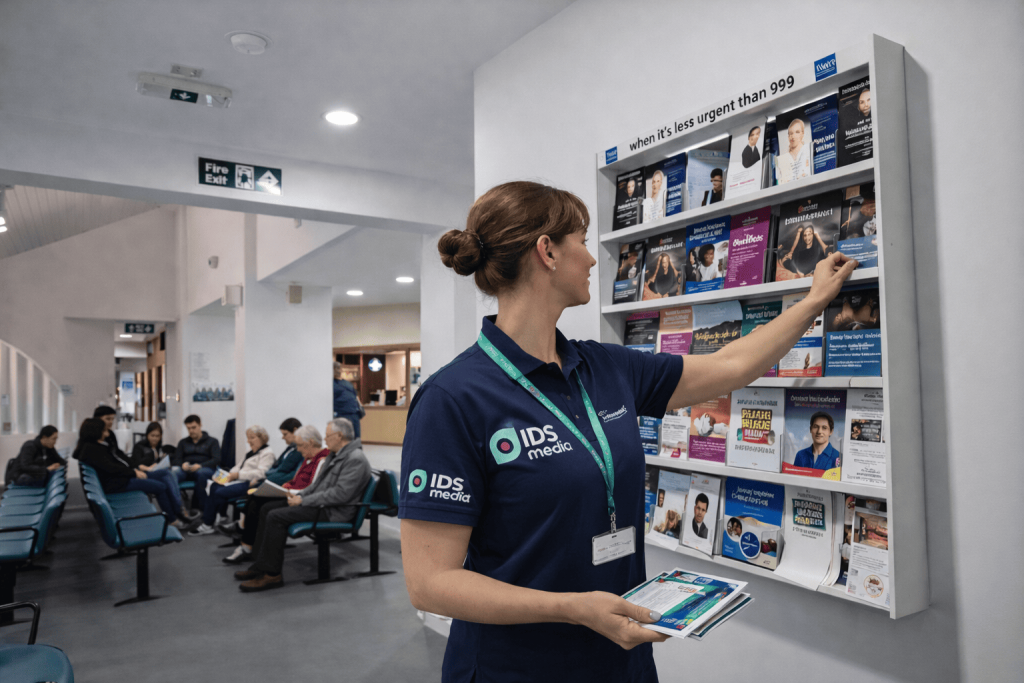

Six key takeaways for marketing to parents in healthcare settings
- Marketing to parents in healthcare settings works best when communication recognises parents as carers first, not consumers. In GP surgeries, hospitals and pharmacies, parents arrive focused on health, reassurance and making informed decisions for someone else.
- Understanding how to market to parents means recognising that healthcare environments change behaviour. Parents are more attentive to information that feels supportive, relevant and grounded in care rather than promotional or sales-led.
- Effective advertising to parents relies on placing messages in the right clinical context – such as maternity units, paediatric clinics and GP waiting rooms – where communication aligns naturally with real healthcare journeys.
- Whether considering marketing to new parents or marketing to millennial parents, tone matters. Calm, practical messaging that offers clear next steps builds confidence, while fear-based or generic parenting content quickly undermines trust.
- Knowing how to target parents in healthcare environments is less about broad reach and more about emotional awareness, timing and collaboration with healthcare professionals to ensure messages add value.
- The most successful marketing to parents UK campaigns are measured not only through visibility, but through outcomes, such as better-informed conversations, increased confidence and parents feeling supported at the right moment.
Marketing to parents is never just about messaging. It’s about trust, responsibility, and timing.
Parents are one of the most engaged, and most sensitive, audiences in healthcare. From registering a child with a GP in the UK (where almost all children are enrolled with primary care services) to attending routine appointments, seeking reassurance, or managing a new concern, parents spend a significant amount of time in healthcare environments throughout their child’s life.
That context changes everything about how communication is received.
In healthcare settings, parents aren’t browsing, scrolling or casually consuming information. They’re often alert, emotionally invested, and thinking about what’s best for someone else. When marketing works in these moments, it works because it respects that mindset.
Understanding the parent mindset in healthcare environments
Parents arrive in GP surgeries, hospitals and pharmacies carrying responsibility. Often, they’re balancing worry, time pressure and the desire to make the right decision, sometimes for the first time, sometimes repeatedly as their child grows.
That means they notice information differently.
In these environments, parents are more likely to engage with messages that feel supportive, relevant and grounded in care, rather than promotional or persuasive. Healthcare settings create a moment where reassurance matters more than persuasion.
As Dean Gahagan, Joint Managing Director at IDS, explains: “Parents in healthcare settings aren’t passive audiences. They’re there because something matters to them. That could be a routine appointment or a real concern, but either way, they’re paying attention in a very different way.”
Healthcare environments are part of everyday life for families. GP surgeries and paediatric services see millions of parent and child visits each year, creating moments where trusted information can genuinely support decision-making.
That heightened awareness makes healthcare environments powerful – and also demands care in how parents are approached.
What works when marketing to parents
When marketing to parents in healthcare settings is effective, it tends to share a few consistent characteristics.
- Relevance over promotion
Parents respond best to information that helps them understand, prepare or feel reassured – not messaging that feels like it’s trying to sell.
Education-led content, clear explanations and signposting to trusted support all work far better than overtly commercial language.
- Practical, supportive tone
In healthcare environments, parents don’t want to be alarmed or pressured. Calm, clear language that acknowledges concerns without amplifying fear is far more effective.
- Clear next steps
The most successful campaigns don’t try to do everything at once. Instead, they encourage a simple, appropriate action – taking a leaflet, scanning a QR code, or speaking to a healthcare professional.
As Neil Pullman, Joint Managing Director at IDS, puts it: “Parents don’t need more noise. They need information that helps them feel confident, often enough to ask the right question or have a better conversation with a healthcare professional.”
- The right environment
Context matters. Messaging aimed at parents works best when it’s placed where it naturally fits – maternity units, paediatric clinics, GP surgeries and pharmacies – rather than being broadcast everywhere.
What doesn’t work and why
Just as important as what works is understanding what quickly undermines trust with parents.
Overly sales-led messaging
Price-driven or promotional language feels out of place in healthcare environments, particularly when parents are present. It can instantly reduce credibility.
Fear-based approaches
While urgency has a role in public health, exaggerated risk or emotionally charged messaging can overwhelm parents and discourage engagement rather than prompt action.
Generic “parenting” tone
Parents are not a single audience, and healthcare settings are not lifestyle spaces. Content that feels generic, patronising or disconnected from real healthcare experiences rarely lands well.
Treating parents like consumers, not carers
In healthcare environments, parents are carers first. Messaging that ignores that responsibility often misses the mark entirely.
Trust, sensitivity and responsibility
Marketing to parents in healthcare settings carries an added layer of responsibility.
The presence of healthcare professionals and clinical surroundings creates an implied endorsement. Parents assume information in these spaces has been considered, approved and deemed appropriate.
That trust must be protected.
In practice, this means:
- Avoiding sensational claims
- Ensuring information is accurate and balanced
- Choosing formats that respect sensitivity
- Being willing to step back when content isn’t suitable.
For IDS, this often involves close collaboration with healthcare professionals to ensure messaging adds value rather than intrusion.
“Knowing when not to place a message is just as important as knowing where it should go,” says Neil. “With parents especially, trust can be lost very quickly if the environment isn’t respected.”
When impact isn’t about immediate results
Success when marketing to parents isn’t always immediate or easily measured.
In many cases, the real impact shows up later, in a conversation, a decision, or a sense of reassurance.
Dean says: “We’ve seen campaigns where the biggest impact wasn’t instant. It was a parent feeling informed enough to ask a question, or a healthcare professional feeling more confident explaining an option. That’s often where the value really sits.”
That kind of outcome rarely comes from pushing messages harder. It comes from being present, relevant and appropriate at the right moment.
Why this approach matters
Parents don’t need more advertising. They need clear, trustworthy information delivered with care.
Healthcare settings offer a unique opportunity to reach parents when health is already front of mind, but only if communication is handled responsibly.
When marketing to parents in healthcare settings is done well, it doesn’t feel like marketing at all. It feels like support arriving at the right time, in the right place, from a source that can be trusted.
In future articles, we’ll explore how this principle applies to specific environments and formats – from digital signage in waiting rooms to pharmacy-based campaigns and public health initiatives.