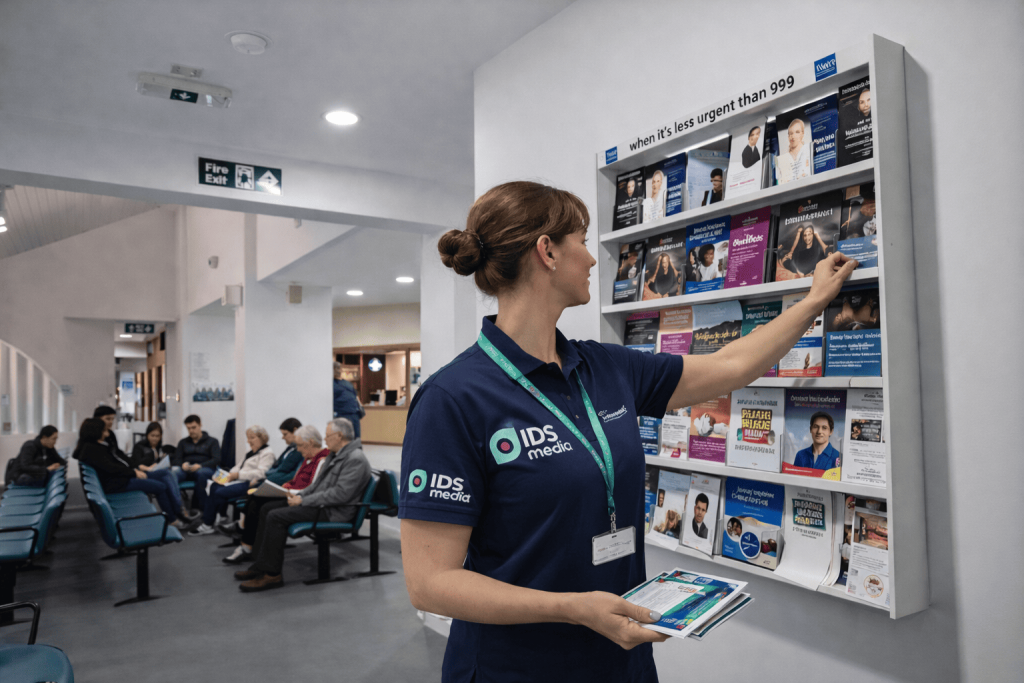

Six key takeaways for healthcare professional (HCP) engagement campaigns
- HCPs respond best to communication that is credible, evidence-based and clinically relevant.
- HCPs are highly influential audiences because patient trust and healthcare decisions are often shaped by their recommendations.
- Concise, practical communication is more effective in busy clinical environments than lengthy or overly promotional messaging.
- Educational HCP campaigns can directly influence awareness, confidence and patient referrals when healthcare professionals feel informed and supported.
- The most effective healthcare campaigns align patient-facing communication with HCP education to create stronger healthcare conversations.
- Successful healthcare communication supports healthcare professionals with tools, resources and information that help improve patient understanding and outcomes.
Communicating effectively with healthcare professionals in clinical environments
Healthcare professionals (HCPs) are one of the most influential audiences in healthcare marketing and communication.
Patients trust them. Communities rely on them. And their recommendations often shape whether someone seeks support, changes behaviour, starts treatment or accesses additional services.
But engaging HCP audiences is very different from communicating with patients.
HCPs are highly knowledgeable, time-poor and constantly exposed to information competing for their attention. Generic messaging, vague claims or overly commercial campaigns can quickly lose credibility in clinical environments.
Dean Gahagan, Joint Managing Director at IDS Media, believes successful HCP engagement starts with understanding how healthcare professionals actually work.
“Healthcare professionals are thought leaders in their own right. They want evidence, research and credibility. They’re not swayed by generic advertising – they need to understand why something matters and how it helps them support patients more effectively.”
That creates a very different challenge for healthcare marketers and campaign teams.
Healthcare professionals are trusted ambassadors for healthcare campaigns
Healthcare professionals sit at the centre of many patient decisions and healthcare conversations.
Whether in GP surgeries, hospitals, pharmacies or community settings, patients often rely heavily on their guidance, reassurance and recommendations.
Dean believes this authority makes HCPs one of the most influential audiences in healthcare communication.
“Patients naturally trust healthcare professionals. If a doctor, nurse or pharmacist recommends something, it immediately carries more weight because of the authority and trust attached to that conversation.”
But trust works both ways.
Healthcare professionals also need to trust the communication they receive before they feel comfortable recommending services, support organisations or healthcare tools to patients.
That means HCP communication needs to feel:
- Evidence-based
- Concise
- Professionally credible
- Clinically relevant
- Practical to use
Dean explained that healthcare campaigns are often most effective when they help HCPs feel informed enough to confidently recommend support to patients.
“The gold dust is when both the patient and the healthcare professional are educated on the same service. That’s when the HCP can confidently recommend it, explain it and effectively become an ambassador for it.”
Why are credibility and practicality so important in HCP communication?
One of the biggest mistakes organisations make when engaging healthcare professionals is treating them like traditional advertising audiences.
Dean believes communication inside clinical environments needs to respect the pressures healthcare professionals work under every day.
“Healthcare professionals are incredibly time-poor. They’re moving between patients, appointments and admin constantly. If communication isn’t immediately useful or relevant, it simply won’t cut through.”
That is particularly important because HCP audiences span a wide range of clinical environments, from GP surgeries and hospital wards to pharmacies and community healthcare settings.
Dean explained that communication must fit naturally into those environments while remaining clear, concise and useful.
“You have to understand the environment the HCP is working in. A GP surgery, hospital ward and pharmacy all operate very differently, and communication needs to fit naturally into those settings.”
Unlike consumer audiences, HCPs are unlikely to engage with messaging that lacks evidence, educational value or practical relevance.
“If you don’t provide facts, evidence or educational value, healthcare professionals will switch off very quickly. Credibility is absolutely critical.”
Over time, IDS Media has learned that healthcare professionals respond best to communication that is efficient, accessible and easy to apply in patient conversations.
“Over 30 years, we’ve learned how to communicate efficiently with healthcare professionals. The materials need to be bite-sized, practical and still feel credible,” said Dean.
That often means focusing on:
- Concise educational summaries
- Quick-reference materials
- Practical patient tools
- Educational HCP packs
- Clear calls to action
Dean believes communication becomes far more effective when healthcare professionals can quickly absorb information and use it confidently within clinical conversations.
“If a healthcare professional can quickly understand the value and use it in patient conversations immediately, that’s where communication becomes effective.”
How can HCP communication influence patient outcomes?
One of the most important roles of HCP communication is helping healthcare professionals feel more confident supporting patients.
IDS Media’s work with The Migraine Trust demonstrated how educational healthcare campaigns can directly influence awareness and patient referrals. Following the distribution of HCP packs to 2,000 GP surgeries, awareness of The Migraine Trust increased significantly among healthcare professionals. Research also showed that the percentage of HCPs recommending Migraine Trust services to patients increased from 45% to 62.5%.
Dean believes these types of campaigns succeed because they support healthcare professionals rather than simply promoting services.
“Healthcare professionals want resources that help them support patients better. When they feel informed and confident about a service, they’re much more likely to recommend it.”
Educational healthcare communication can also help improve long-term patient understanding and condition management.
IDS Media’s campaign supporting Omron’s connected blood pressure monitoring tools focused on helping both healthcare professionals and patients better understand hypertension monitoring and long-term heart health management.
The campaign positioned connected monitoring as a practical tool that could support diagnosis, patient confidence and ongoing care.
Dean believes this type of healthcare marketing works because it focuses on improving healthcare experiences rather than simply increasing visibility.
“Healthcare professionals respond to communication that genuinely helps improve patient outcomes. They’re interested in tools, services and information that make healthcare management easier, safer or more effective,” said Dean.
Aligned messaging creates more effective healthcare conversations
Some of the most effective healthcare campaigns combine patient-facing communication with educational HCP support.
Dean believes this creates stronger and more productive healthcare conversations because both audiences are working from the same understanding.
IDS Media’s Breast Cancer Now campaign combined patient awareness materials across GP surgeries with educational support designed to reinforce conversations around secondary breast cancer awareness.
“When both the patient and the HCP understand the same service or condition, conversations become much easier and more productive. The patient feels more confident asking questions and the HCP feels more confident guiding them.”
This “full-circle” approach helps healthcare communication feel connected rather than fragmented.
Effective healthcare communication is built on credibility and value
As healthcare environments continue evolving, communication with healthcare professionals is becoming increasingly important.
But influencing HCP audiences requires far more than visibility alone.
Effective healthcare campaigns rely on:
- Trust
- Evidence
- Practical value
- Professional credibility
- Educational support
- Understanding of clinical environments
For IDS Media, the focus goes far beyond placing messaging inside healthcare settings. The goal is to create communication that helps healthcare professionals feel informed, confident and equipped to support better patient outcomes.
“Ultimately, effective healthcare communication creates better conversations between patients and healthcare professionals,” said Dean. “That’s where meaningful behaviour change and better outcomes really start.”
Get in touch to discuss your next healthcare campaign.