
Reach the right people with creative shaped for healthcare environments. From posters and leaflets to digital screens and education packs, we combine audience, placement and patient journey insight to make every message clear, accessible, relevant and easier to act on.
Healthcare communications reach people when health and wellbeing are already front of mind, but the setting alone cannot guarantee a message will connect.
Patients may be seeking answers, carers looking for reassurance and healthcare professionals working under pressure.
Design brings together the audience, environment, format and objective to create communication that feels relevant, credible and easy to understand. It attracts attention, communicates what matters and makes the next step clear.
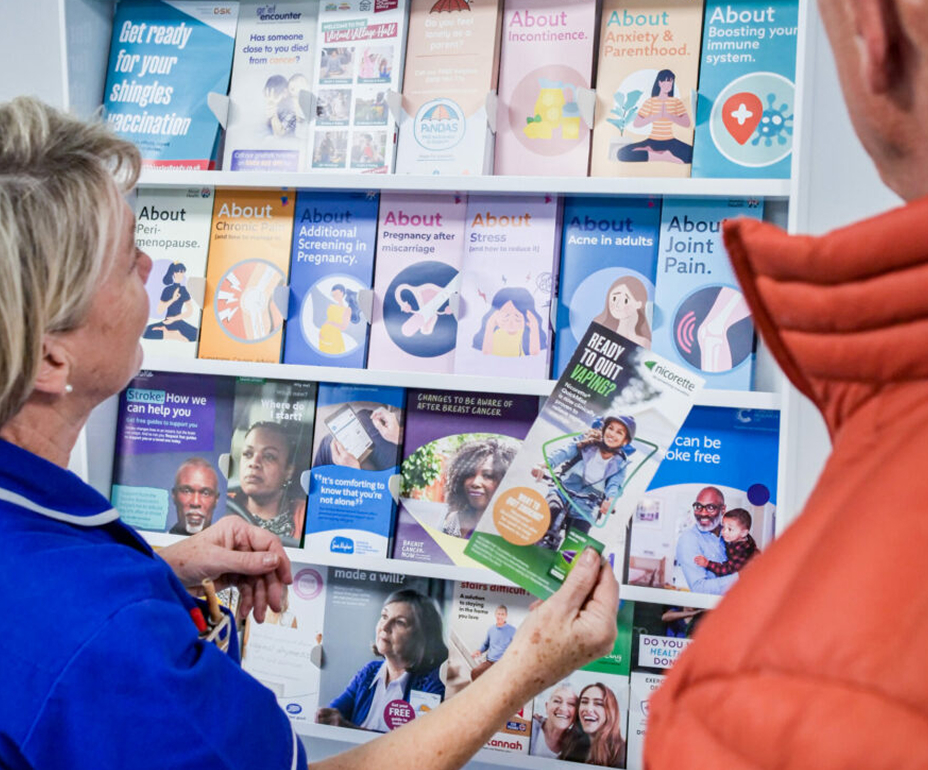
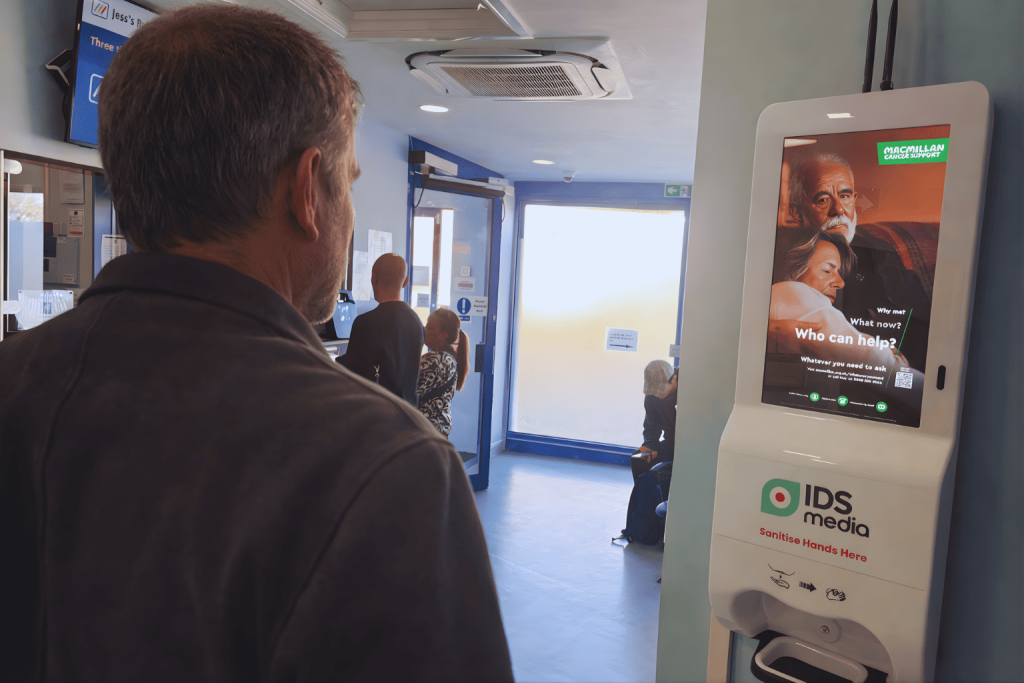
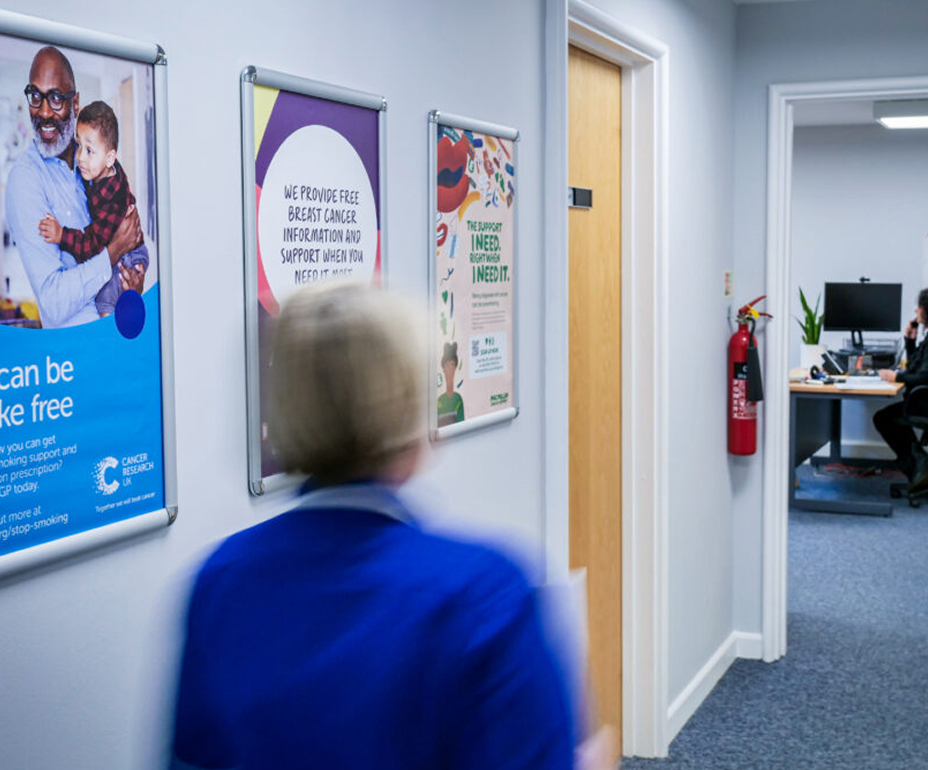
The way people respond to healthcare communication can change throughout their care journey. A message that works in one environment may need to be adapted for another.
Leaflets give audiences more time and space to explore a subject. Clear navigation, accessible language and well-structured information help people find what matters to them and take the content away for future reference or to share with others.

Education packs for healthcare professionals need to feel useful, relevant and credible. The content and design should work together to make complex information easier to scan, support informed conversations and provide practical value beyond the first interaction.

Emails and online adverts need to earn attention quickly and give people a compelling reason to continue. Creative should be tailored to the channel, audience and intended action rather than lifted directly from a print campaign.

When several formats are used together, each asset should play a clear role. Consistent messaging and recognisable design build recall, while adapting the level of detail and call to action for each touchpoint helps move the audience forward.
Understand who you need to reach, what they may already know and what might help or prevent them from acting.
Consider where the creative will appear, how it will be viewed and how much attention the audience is likely to give it.
Decide what the audience should understand, feel or do. Trying to communicate too much at once can weaken the most important message.
Legible typography, strong contrast, inclusive imagery, plain language and a clear content hierarchy help more people engage with the communication.
Claims, statistics and supporting evidence should be accurate, appropriately presented and subject to the necessary review and approval. Tone and imagery should also reflect the sensitivity of the subject and the audience’s circumstances.
Whether the aim is to scan a QR code, visit a website, speak to a healthcare professional or find further support, the call to action should be clear and proportionate.
There’s a lot to consider when creating communication for patients, carers and healthcare professionals.
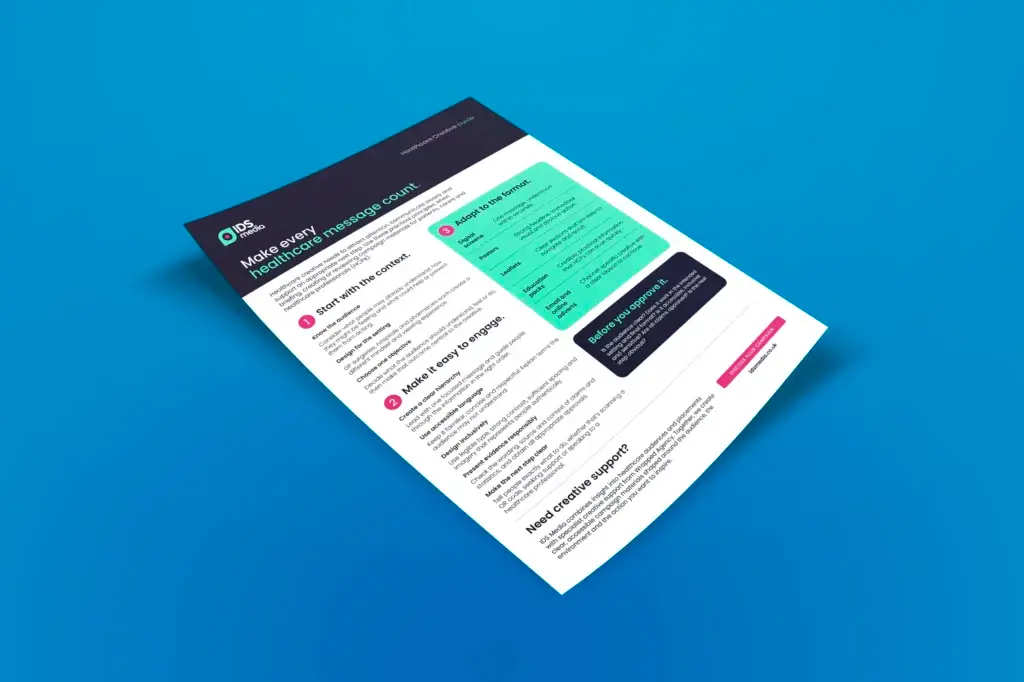
Our practical guide explores how to develop creative that works across healthcare environments and formats. It includes best-practice advice on audience needs, message hierarchy, accessibility, imagery, evidence, calls to action and final creative checks.
Use it to brief your team, review existing campaign materials or plan your next healthcare campaign with greater confidence.

IDS Media combines over 30 years of healthcare media experience with real insight into NHS audiences, placements and the patient journey.
For specialist creative support, we work in partnership with Wrapped Agency, a healthcare marketing and creative agency experienced in turning complex information into clear, engaging communication.
Together, we can help you connect strategy, placement and creative from the outset. Whether you need a single campaign asset or a joined-up suite of materials, we can develop creative shaped by the audience, the environment and the action you want to inspire.