Six key takeaways for healthcare digital signage
- Healthcare digital signage works differently from traditional screens because people in GP waiting rooms and hospitals expect calm, relevant and trustworthy information rather than entertainment or hard-selling. The environment shapes how content is received.
- Effective digital signage for healthcare supports clinical settings by reinforcing reassurance, helping patients understand information and enabling healthcare professionals to communicate clearly within trusted environments.
- The most successful digital signage solutions for healthcare prioritise context over technology, focusing on pacing, tone and emotional awareness so screens feel supportive rather than intrusive.
- Many digital signage solutions for hospitals combine carefully selected advertising with NHS or hospital messaging, allowing healthcare teams to communicate directly with patients while helping fund the infrastructure itself.
- The real benefits of digital signage in healthcare come from trust and timing. High-dwell environments such as GP waiting rooms give patients space to absorb information and feel more confident starting conversations with healthcare professionals.
- Whether used across hospitals, GP waiting rooms or digital signage for doctors offices, the best healthcare screens don’t compete for attention, they blend into the environment, respect patient mindset and support care rather than distraction.
Digital signage is everywhere. Screens now appear in shops, transport hubs, offices and public spaces, often competing loudly for attention.
Healthcare is different.
The moment someone enters a GP waiting room or hospital environment where healthcare digital signage is present, expectations change. People aren’t there to be entertained or sold to. They’re waiting, reflecting, seeking reassurance, or preparing to speak to a healthcare professional. In those moments, screens don’t just display content – they shape how the environment feels.
That’s why healthcare digital signage needs a different approach.
What people expect from healthcare digital signage
In healthcare settings, screens are expected to support the space, not dominate it.
People don’t arrive in GP waiting rooms or hospitals looking for distraction. They expect information that feels calm, relevant and appropriate to the environment they’re in.
Healthcare digital signage works best when it:
- Feels reassuring rather than intrusive
- Aligns with the clinical setting
- Supports understanding rather than demanding attention.
As Neil Pullman, Joint Managing Director at IDS, explains: “When someone is sitting in a waiting room, they’re already processing a lot. Screens need to work with that mindset, not compete with it. If content feels out of place, people notice and trust can disappear very quickly.”
In practice, this means clear visuals, measured pacing and messaging that feels considered, rather than rushed.
Why trust matters more than the screen itself
In healthcare environments, trust doesn’t start with the message – it starts with the setting.
GP surgeries and hospitals carry an inherent sense of credibility. Screens placed within them benefit from that trust, but they also have a responsibility to protect it.
When digital signage is done well, people instinctively treat the information they see as more credible than content encountered elsewhere. When it’s done poorly, the impact is immediate, and often negative.
“Screens in healthcare settings aren’t neutral,” says Dean Gahagan, Joint Managing Director at IDS. “They’re part of a trusted environment. What appears on them needs to earn that trust every day.”
That’s why tone, frequency and relevance matter far more than technical capability.
What builds trust on healthcare screens
From experience, a few consistent principles help digital signage feel right in clinical environments.
- Calm, considered content
Fast-moving visuals, flashing graphics or overly busy layouts feel out of place in healthcare settings. Simpler content allows people to engage without feeling overwhelmed.
- Clear relevance
Messages should make sense for the audience and the environment they’re in, whether that’s a GP waiting room, outpatient clinic or hospital ward.
- Balance
Healthcare digital signage often works best when it carries a mix of carefully selected advertising alongside NHS or hospital messaging. This allows healthcare teams to share important updates, guidance or reassurance while maintaining a supportive atmosphere.
- Respect for attention
Screens shouldn’t demand attention. They should be there when people choose to look.
What doesn’t belong on healthcare digital signage
Just as important as what works is knowing what quickly undermines trust.
Overly commercial content
Hard selling, price-led messages or promotional tactics that might work elsewhere often feel inappropriate in healthcare environments.
Visual noise
High-volume loops, loud colours or constant movement can increase anxiety rather than reduce it, particularly in waiting areas.
Content that ignores context
Healthcare settings are not retail spaces. Messaging that forgets this distinction tends to stand out for the wrong reasons.
As Dean says: “If content feels like it belongs somewhere else, people pick up on that straight away. In healthcare, that disconnect can undo trust very quickly.”
Why context matters more than content
It’s easy to focus on what appears on the screen. In healthcare, where and why matter just as much.
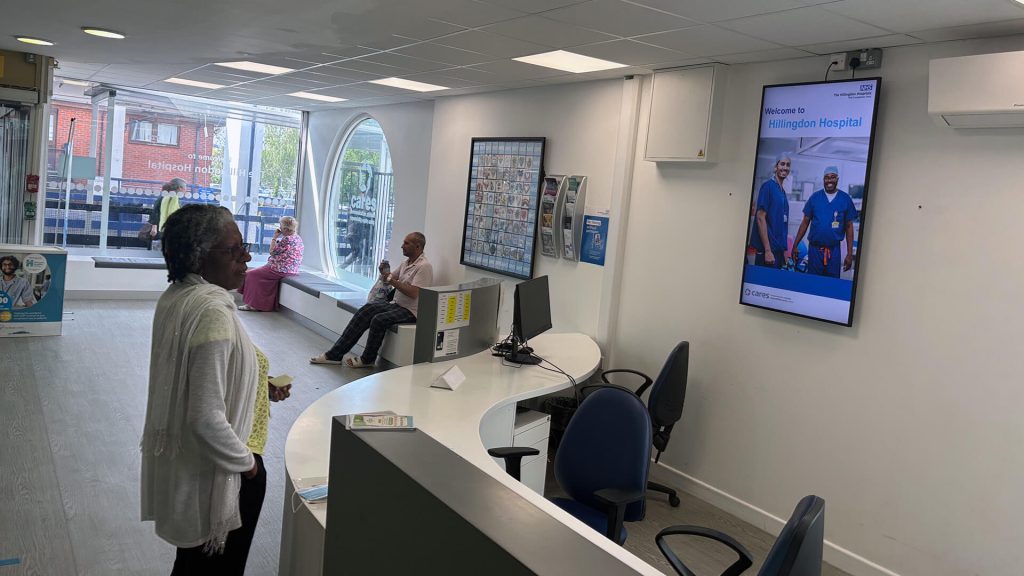
GP waiting rooms and hospital spaces are high-dwell environments. People often spend several minutes waiting before appointments, creating a rare moment where healthcare digital signage can support understanding rather than compete for attention.
Digital signage works best as a prompt, not an endpoint. A screen might introduce an idea, raise awareness or encourage a conversation, but it’s often the interaction with a healthcare professional that follows where real understanding happens.
Digital signage as part of a wider system
In healthcare settings, screens rarely work in isolation. Effective digital signage often sits alongside:
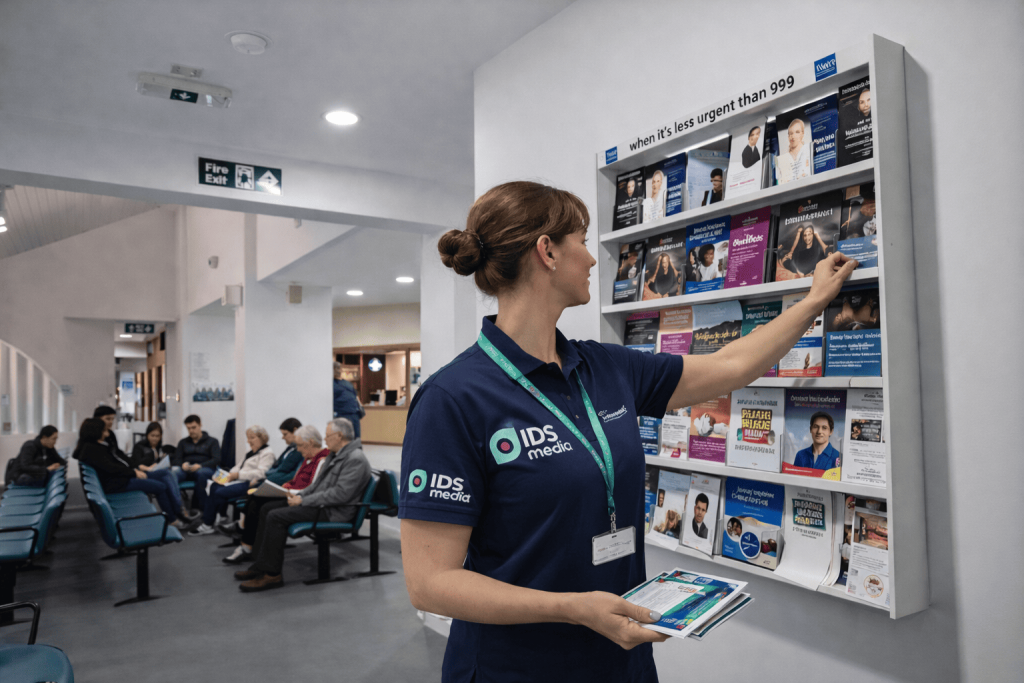
- Printed materials in waiting rooms
- Conversations with healthcare professionals
- QR codes linking to trusted information
- On-site messaging from hospitals or GP practices.
Across IDS’s growing network of GP and hospital screens, digital signage allows healthcare organisations to communicate directly with patients while carefully selected advertising helps fund the infrastructure.
Handled properly, this model ensures screens serve the environment first, rather than introducing additional pressure or expense.
When healthcare digital signage works best
When healthcare digital signage is done well, it doesn’t shout for attention.
It feels appropriate.
It feels useful.
And most importantly, it feels trustworthy.
Neil says: “The best healthcare screens don’t feel like screens at all. They blend into the environment and support what’s already happening, rather than trying to take over.”
That’s the difference between digital signage that simply fills space, and digital signage that genuinely supports care.
Looking ahead
As healthcare environments continue to evolve, digital signage will play an increasingly important role, particularly in GP waiting rooms and hospitals where people spend time, ask questions and seek reassurance.
In future articles, we’ll explore this in more detail, from pharmacy digital signage and GP waiting room environments to how impact can be measured responsibly through engagement, outcomes and trust.
Because in healthcare, the success of a screen isn’t about how bright it is – it’s about how well it understands the space it’s in.